Hvítserkur Rock Formation
The hotel offered a continental breakfast featuring tasty Icelandic cheeses, pastries, and fruit, and guests had a beautiful view of the mountains from the converted gymnasium. The line of snow in the backdropped mountain was a little too close to us for comfort when we came out in the morning. While no snow had accumulated on the ground near the hotel, it had gotten pretty close, and we were very thankful to have woken up in a warm bed. While the weather was expected to clear throughout the day, it was still drizzling/wet snowing by the time we left Hótel Hvítserkur. Before heading back to the Ring Road, we continued driving on the gravel road several kilometers north to a rock formation known as Hvítserkur.
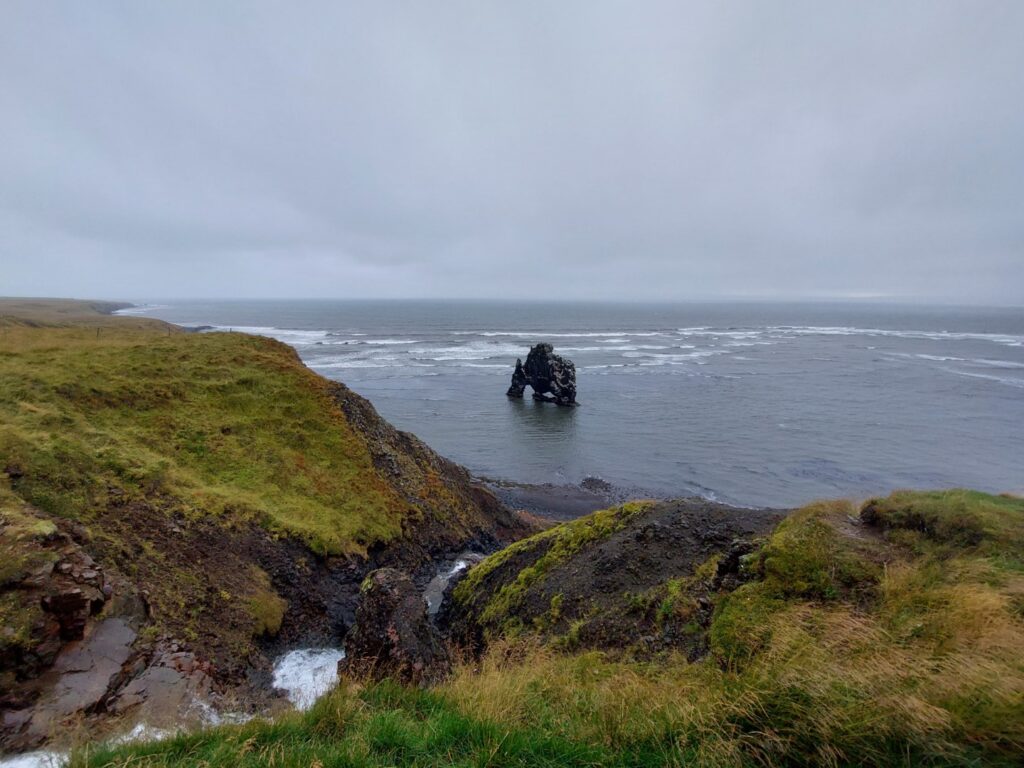
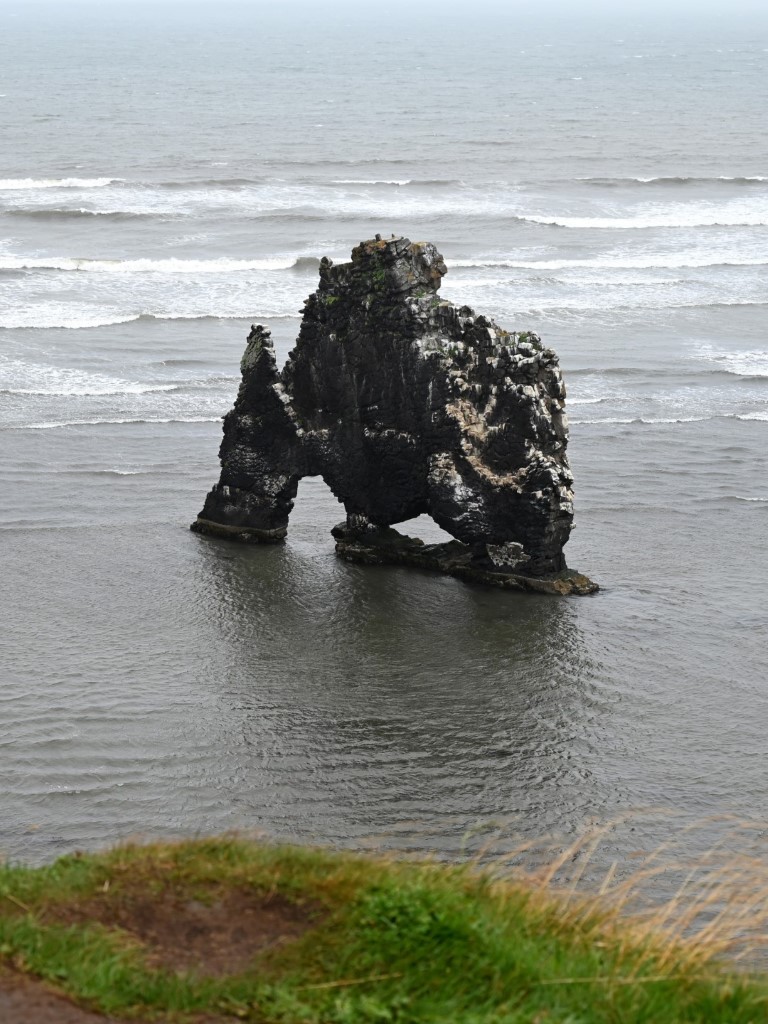
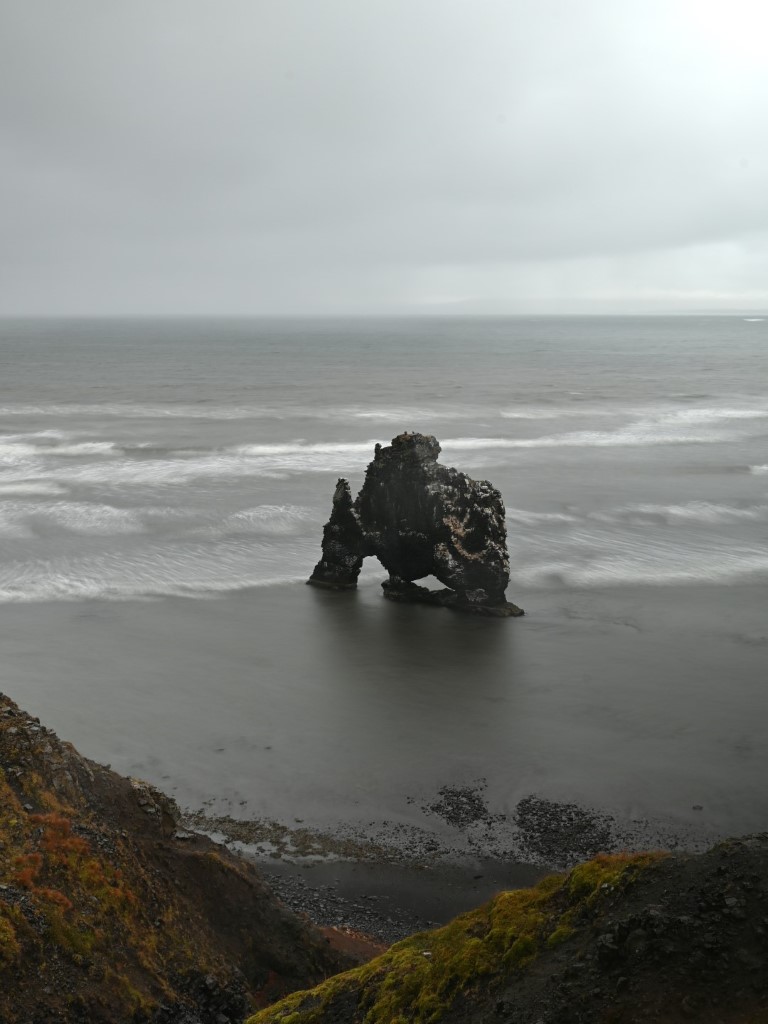
Found approximately 60 meters from shore, Hvítserkur is a 15-meter-tall column of basalt that has been cut off from the nearby cliffside. The erosion-carved rock has been shaped over thousands of years to resemble an elephant or troll (or rhino or dragon). In fact, many have long believed the sea stack to be a troll that was turned to stone when he lost track of time and was caught out in the rising sun. It’s a short walk to the viewpoint, but on this day sideways rain and a lowering fog bank meant the trek was not easy. Nonetheless, we managed to get a few pictures of Hvítserkur before running back to the car to warm up.
West Fjords & the Town of Hólmavík
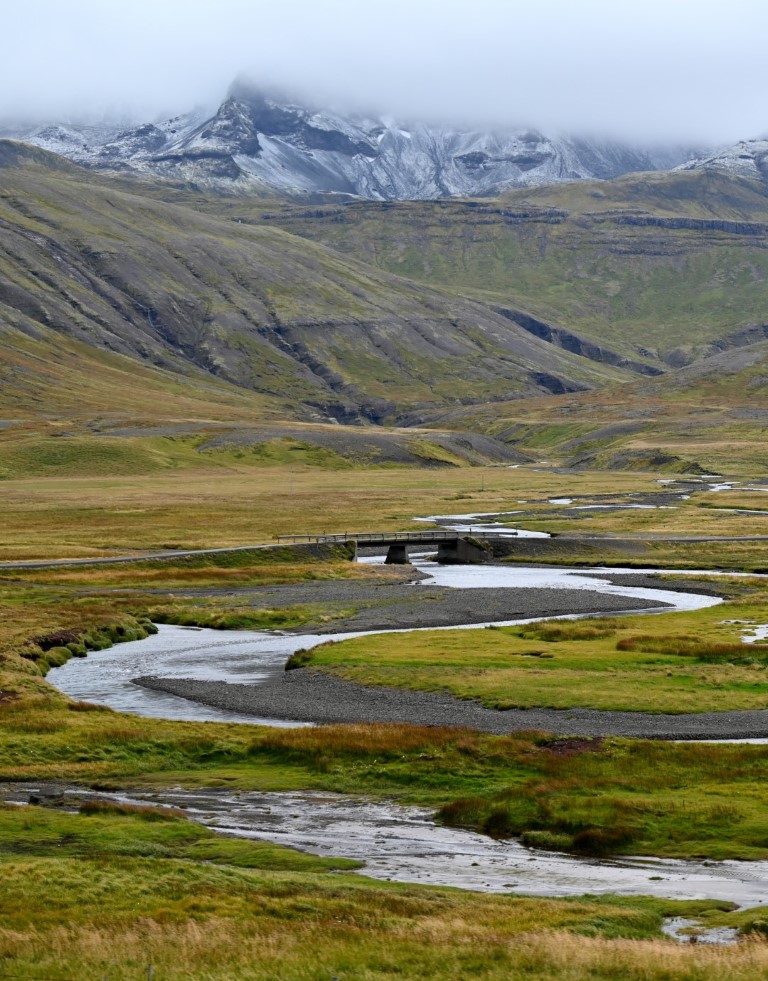
Connected to the rest of the island by a narrow isthmus, the West Fjords are similar in many ways to the East Fjords, albeit further off the beaten track. Several roads wind through the large peninsula, for the most part sticking to the coastline and winding through its many fjords. We didn’t have time to explore the whole area in detail, so instead we opted for a small portion.
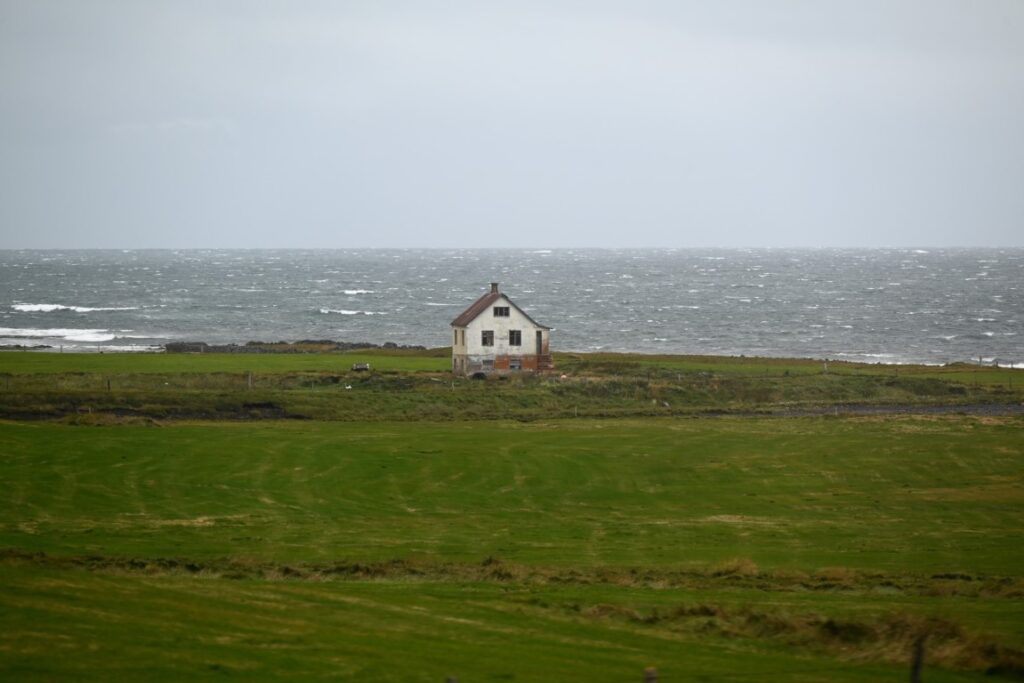
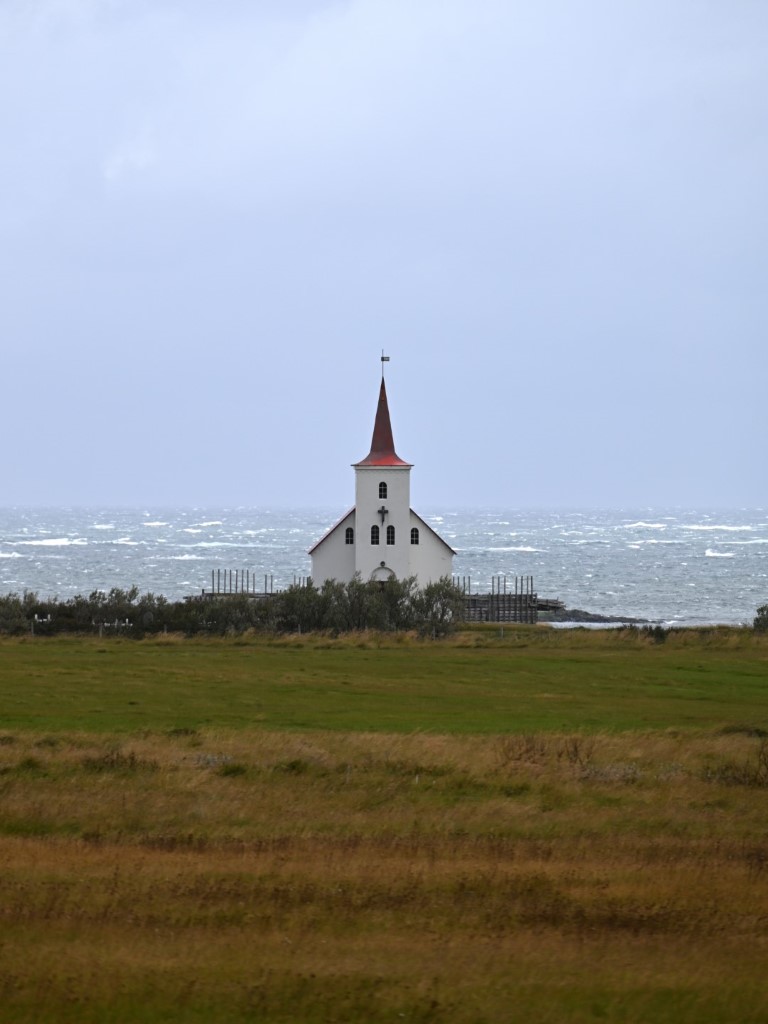
Driving through the West Fjords, we found ourselves in the remote and rugged region of the Strandir Coast, where the small town of Hólmavík is found. While isolated from the rest of Iceland, Hólmavík is a worthwhile detour as it symbolizes a traditional northern Icelandic fishing town, beautifully backdropped by the surrounding fjords. While the waters of the Arctic Ocean were frigid to touch, this does not prevent locals from venturing into the surrounding seas to fish, an industry the town heavily relies on.
Museum of Sorcery & Witchcraft
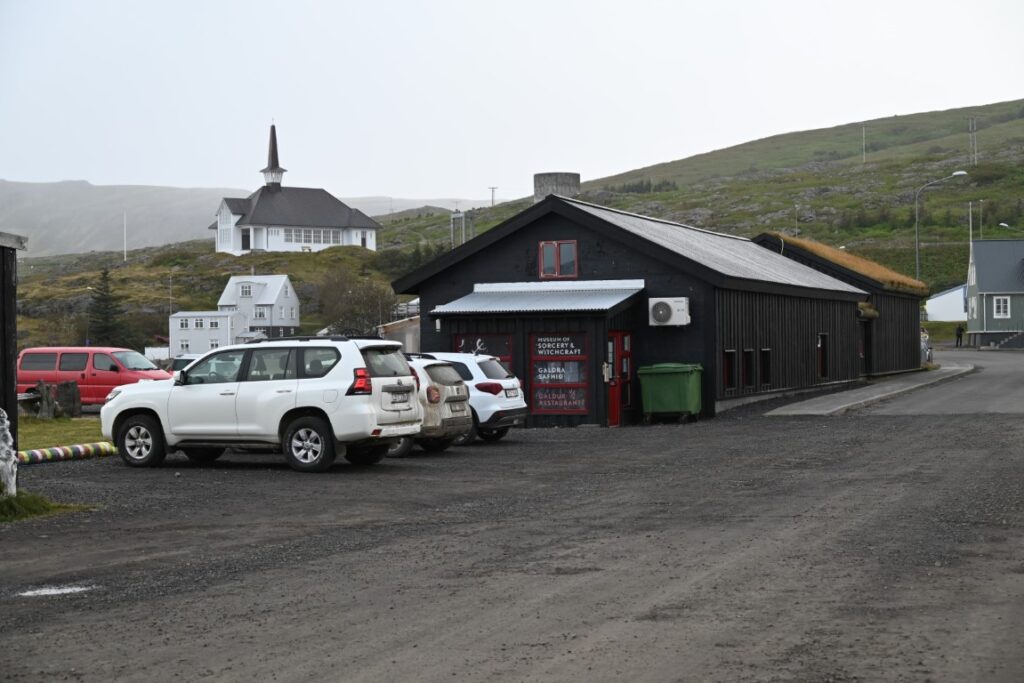
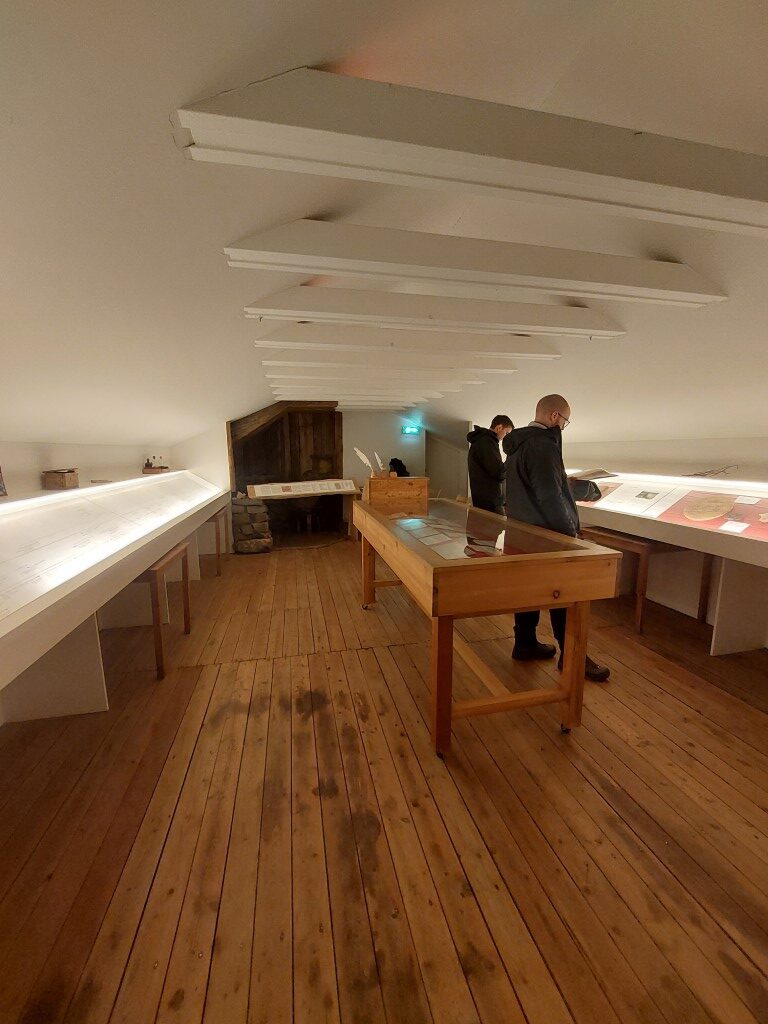
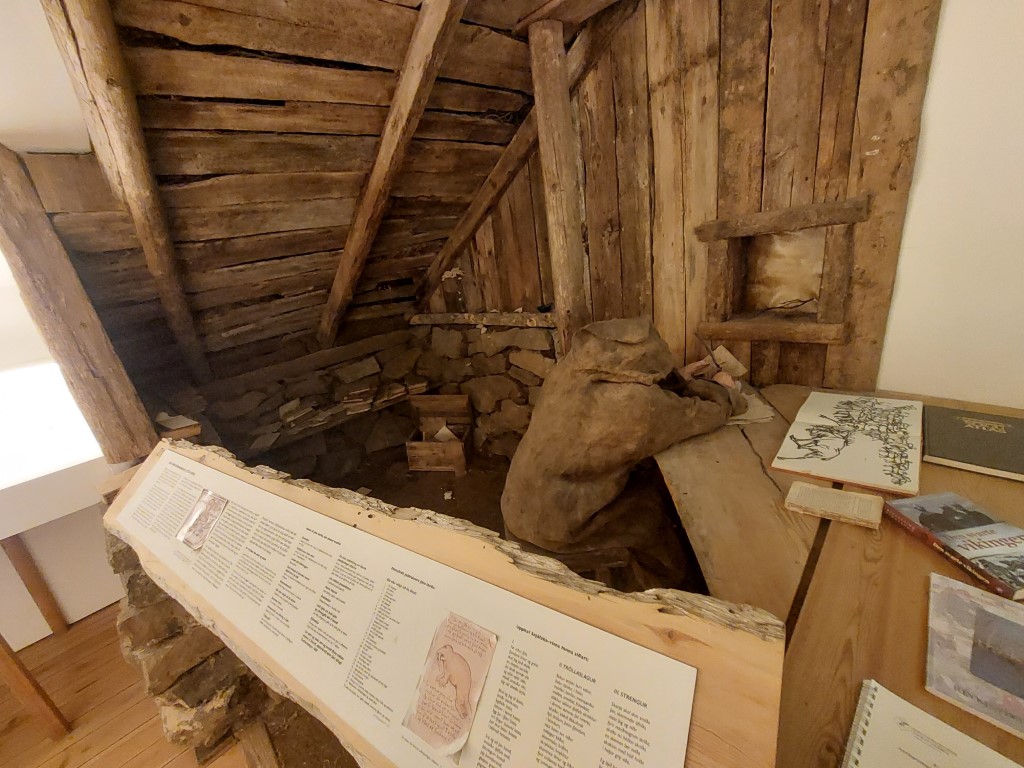
But it was not the quaint little harbour nor beautiful scenery that brought us to Hólmavík. Instead, we made the detour to visit one of its most distinctive attractions, the Museum of Icelandic Sorcery & Witchcraft. Housed in an old waterfront building, the museum tells the dark and cruel history of witch trials on the island. Entering the dimly lit building, you first pass through a small café before entering the museum itself. After paying a small fee, we were handed an English booklet that we used to walk the self-guided museum. A mix of interpretive signs and artifacts tells tales of spells, runes, and rituals, many of which were tied to farming, fishing, and wealth-class disparities in the harsh northern landscape.
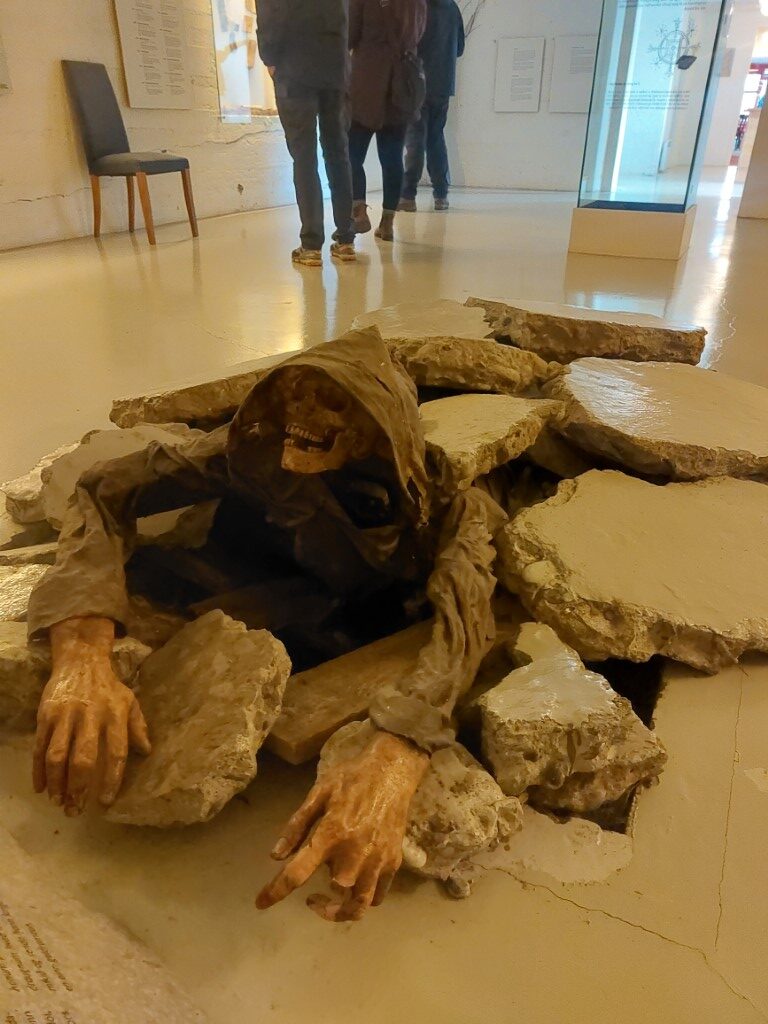
Stories of executions, omens, and dark magic have long been part of Icelandic culture. Interestingly enough, many of the witches executed over the years were actually men, who curiously were almost always of a much lower wealth class than their accusers. This was interesting because in the New England witch trials, accusations were rooted more in misogyny than simply in poverty. While the museum contained many stories and folklore of Iceland’s early settlers, one of the museum’s most infamous exhibits is the nábrók, or necropants. Said to be made from human skin, wearing the pants and putting a coin in them was said to give the wearer infinite wealth. While a nice thought, the grotesque hand-stitched pants were both fascinating and unsettling to see.
As we wandered around town taking in the sights, Lindsay managed to find the brewery, Galdur Brugghus. Nestled in a large, dark warehouse, the brewer was found chatting with what seemed to be a friend. She left with an assortment of bottles and recounted to us back in the car how she was shocked when the brewer remarked that tourist season ends in this town around August 15, so the brewery only opens for local events by September.
We were sad we could not spend much time exploring the rest of the West Fjords, but with only a few days left in our trip we headed south again, with a new appreciation for Icelandic culture and the enormity of the island.
Stykkishólmur
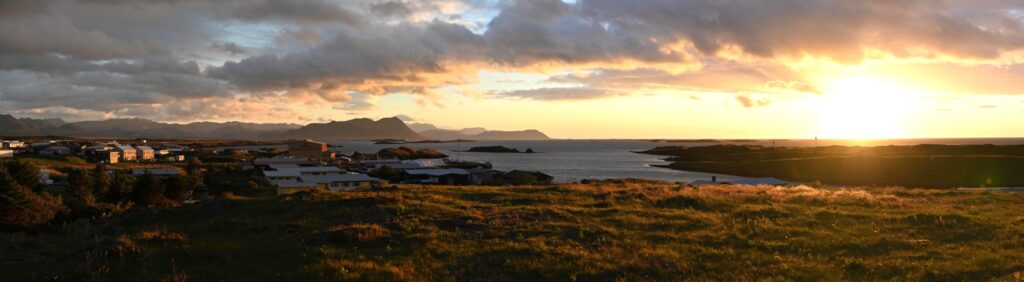
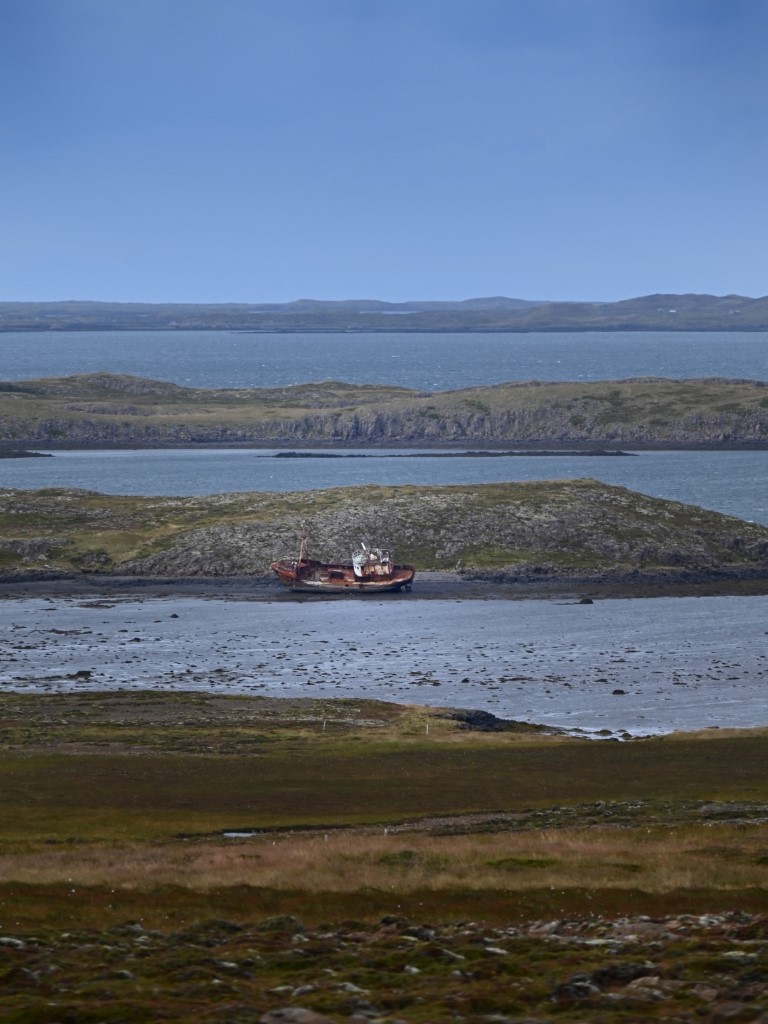
As we drove, we soon found ourselves entering the town of Stykkishólmur, where we had booked our accommodations for the night. Stykkishólmur sits at the northern gateway to the Snæfellsnes Peninsula. The picturesque town is dotted with pastel houses, stacked on top of one another, backdropped by rolling hills and snow-covered mountains. We had originally planned on not stopping in the town, but after finding it was one of the few with available accommodations, we lucked out with an excuse to visit. And we were better off for it! The town is a must-see when visiting the Snæfellsnes, with its clean streets and quaint, well-maintained gardens giving the appearance of a model village, while the waterfront was a flurry of activity as fishing boats came and went, as well as the daily ferry which departs here for the West Fjords. A large outcrop of rock acts as a natural protective breakwater for the harbour, known as Súgandisey Island, sitting atop of which is a distinguishable red-roofed lighthouse.
Our accommodations for the night were at Sjávarborg, a small hostel tucked away in one of the town’s picturesque waterfront buildings. As an added bonus—and keeping up with our film location references—across the street from our hostel was the famous “Greenland” bar from the movie The Secret Life of Walter Mitty. In the movie, the town is portrayed as Greenland, with the bar and neighbouring street serving as the location where Walter Mitty runs to the helicopter, only to be dropped off on a fishing boat far out at sea.
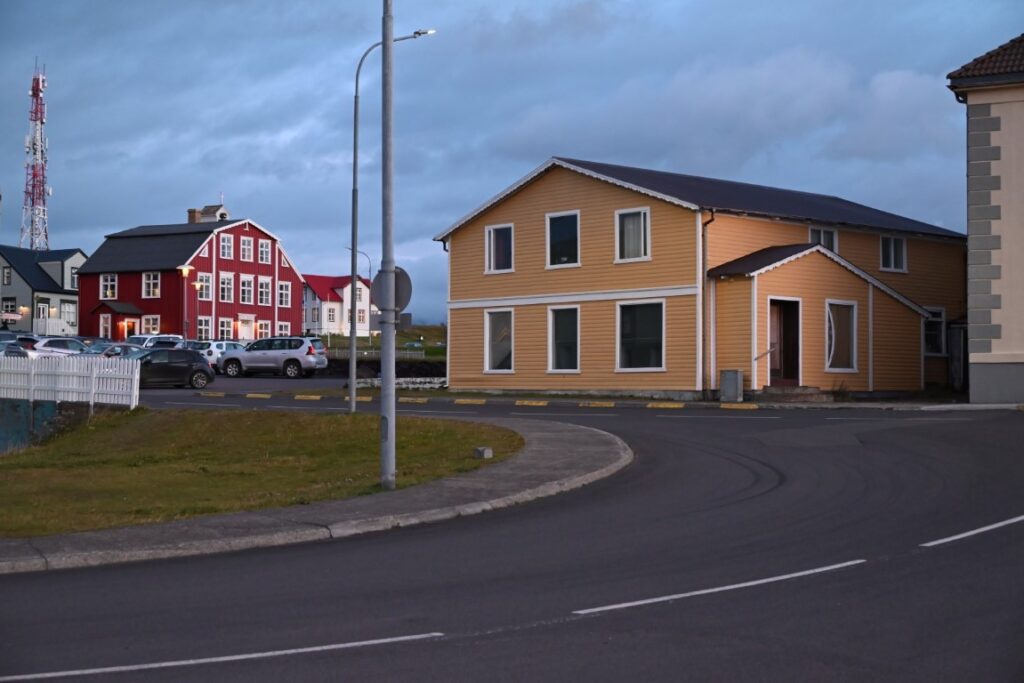
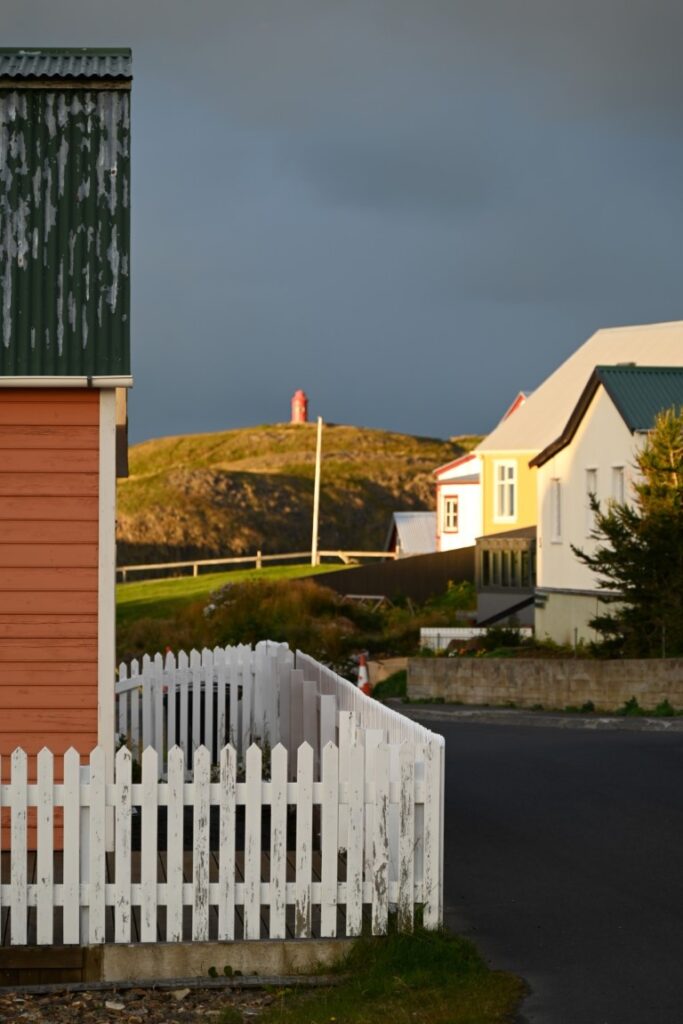
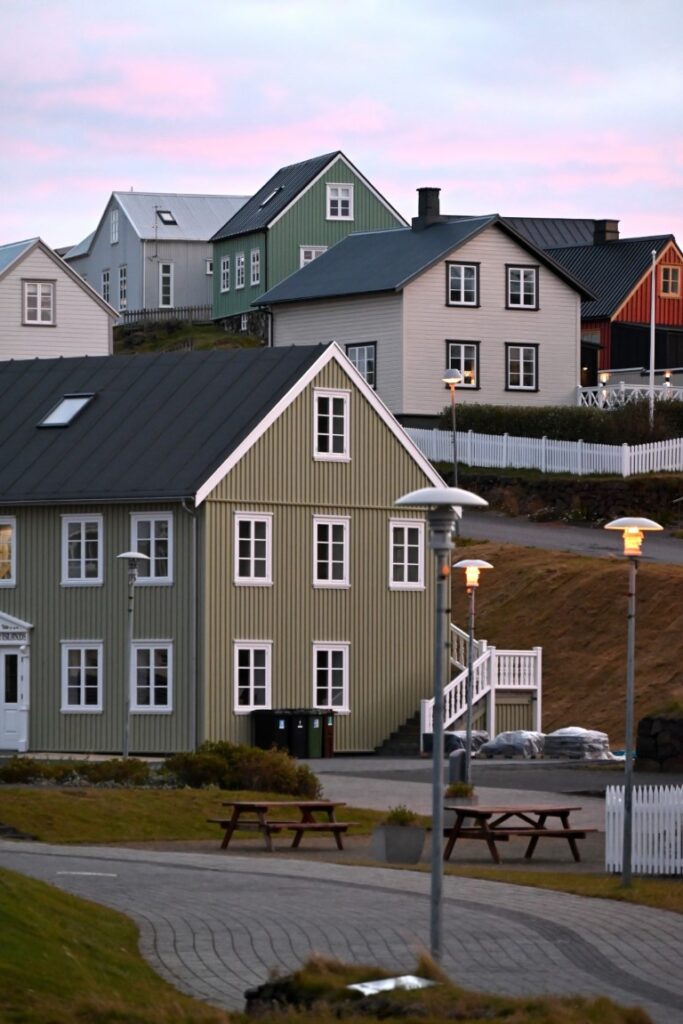
We explored the town by foot, taking in the beautiful sunset over the western mountains, and then headed back to the hostel to cook up a meal in the cozy shared kitchen, where other families and travellers were finishing up and chatting about their day.