
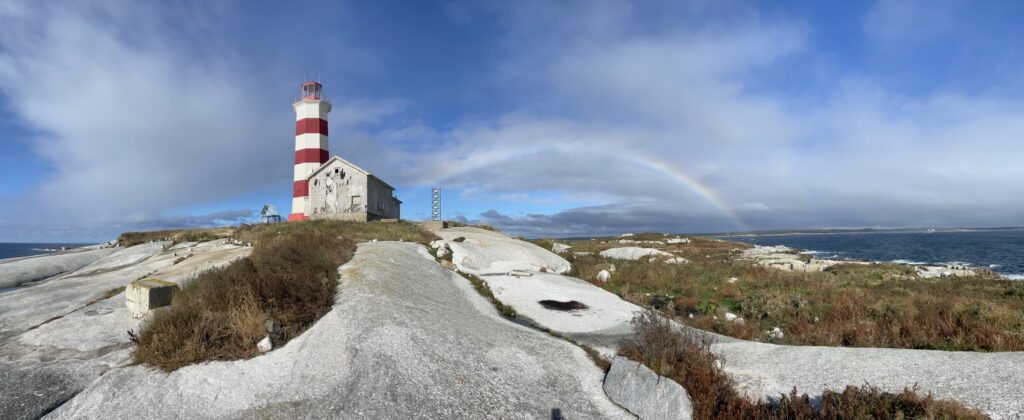
Located at the mouth of Halifax Harbour, Sambro Island is a beautiful mix of light-coloured granite patched with small fields of grass and wildflowers. Since the establishment of Halifax as a British naval base, the island has served as a critical navigation aid for ships entering and leaving the harbour. Today, the red and white lighthouse continues to operate and remains a recognizable landmark. It is even said to be one of the longest-standing and continuously operating lighthouses in the Western Hemisphere. The history of this small island is tied closely to the development of the harbour and coastal navigation itself. The island is also representative of the region’s fascinating geologic features and is home to a variety of wildlife, including basking seals and bald eagles. It has also become a popular whale-watching site. While not easy to access, Sambro Island is a place well worth visiting.
History of the Lighthouse
In 1713, the Treaty of Utrecht was signed, ending the most recent conflict between the English and the French. The treaty gave control of mainland Nova Scotia to the British, who had yet to establish a significant population there. Meanwhile, France retained Cape Breton and quickly began constructing Fortress Louisbourg. In response, and to solidify British control in the area, Halifax was established in 1749 as a hub of British power in Nova Scotia. With this, the number of people and ships travelling to and from the harbour began to rise.
The need for a navigation aid at Sambro Island was quickly recognized. In 1752, merchants and seafarers proposed a lottery to raise funds for a lighthouse, but it never came to fruition. In 1758, the newly formed Nova Scotia legislature allocated £1,000 for the construction of a lighthouse, and work began shortly thereafter. The lighthouse was completed the following year and became operational on April 23, 1759, with Joseph Rous appointed as its first lighthouse keeper.
The Sambro Island Lighthouse is considered the oldest continuously operating lighthouse in North America. While lighthouses were established at both Louisbourg and Boston before 1759, the Louisbourg lighthouse was destroyed during the siege of Louisbourg, and the Boston Light was destroyed in 1776.
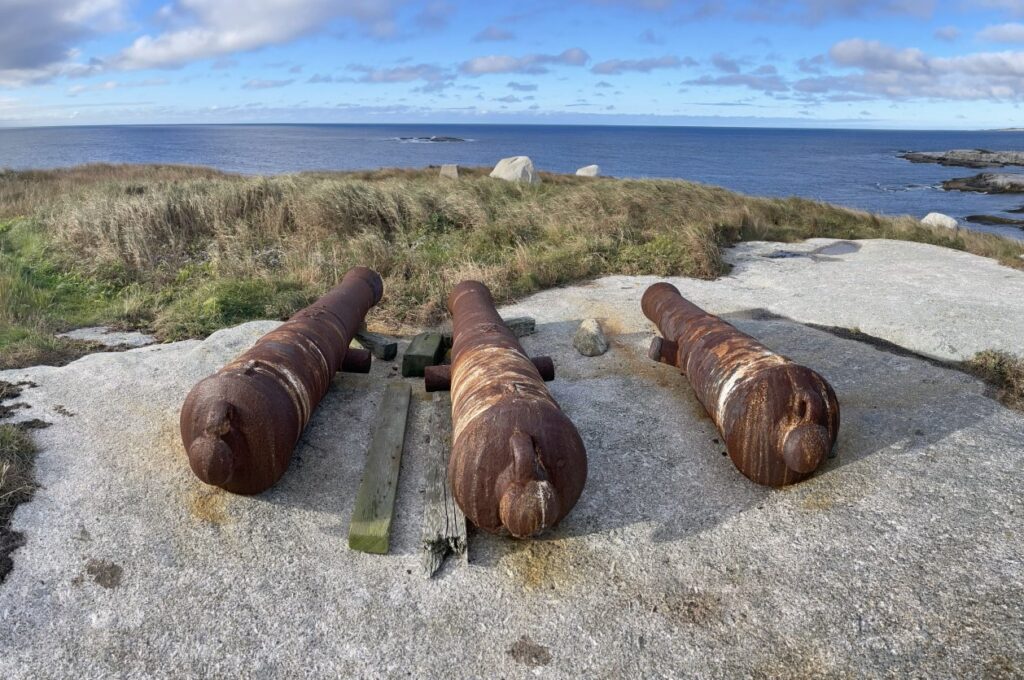
Despite being welcomed by mariners, the lighthouse’s reliability and visibility were often criticized. In 1771, the sloop Granby ran aground near the island, an incident blamed on the poor operation of the light. Fog and low visibility were ongoing problems, and in 1834, a fog cannon was installed at the site. It wasn’t until 1865 that a new lantern and lighting apparatus were imported from Britain and installed in the lighthouse.
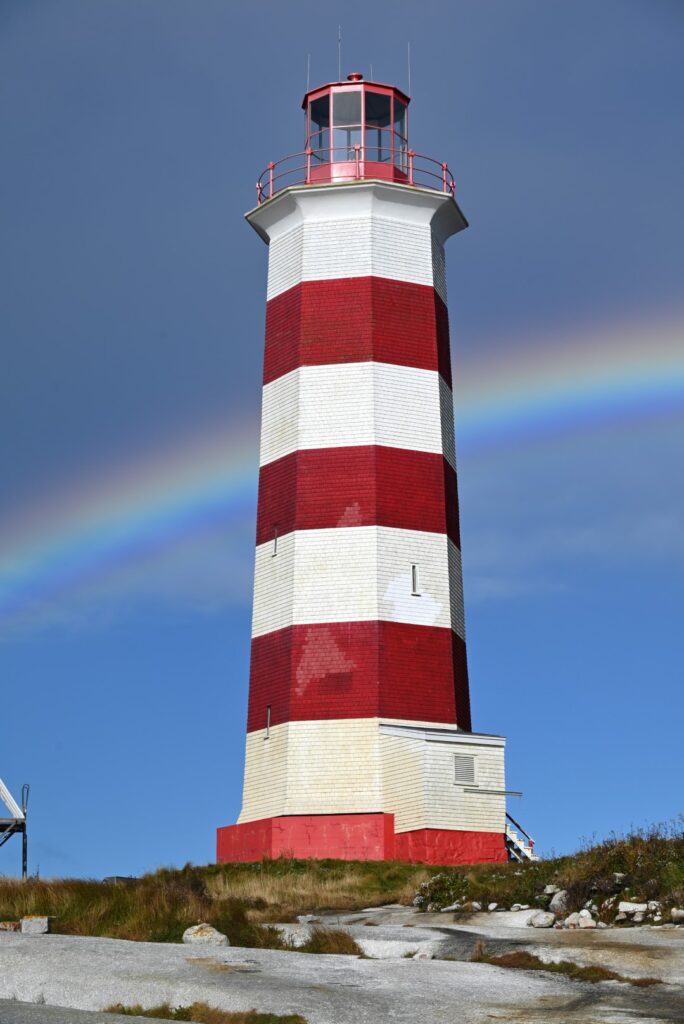
Throughout the 19th century, the lighthouse and fog alarm were regularly upgraded—driven by both advancing technology and the growing maritime activity in Halifax Harbour. The original 1758 structure was 6.4 metres (21 feet) wide at its octagonal base and built of 1.7-metre-thick (5.5 feet) cut stones. In 1906, the lighthouse underwent major upgrades: the tower was extended by 6.1 metres (20 feet), and a new first-order Fresnel lens made by Barbier, Bénard & Turenne of Paris was installed. The white light, flashing once every five seconds, was placed atop the red and white tower.
Despite being anchored in firm granite bedrock, by 1950 a slight sway was detected in the tower. A concrete collar was subsequently installed at its base to stabilize the structure. In the mid-1960s, the Fresnel lens was replaced by a powerful airport-style beacon, and a new lantern room was added. In 1988, technological advances enabled automation of the light, eliminating the need for a keeper. John G. Fairservice became the last lighthouse keeper to live on the island.
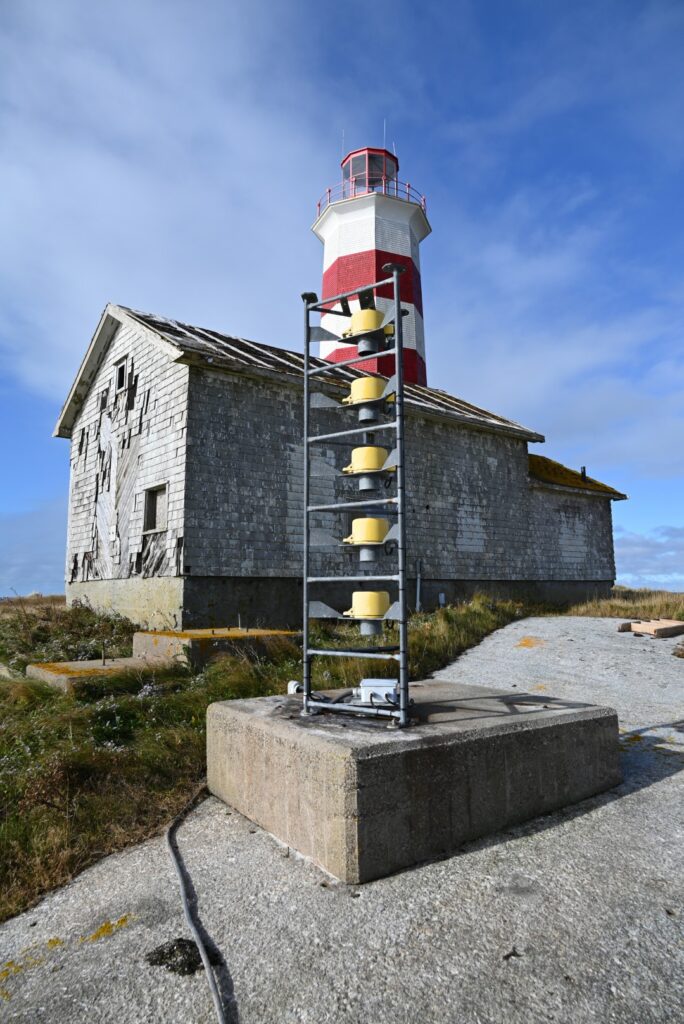
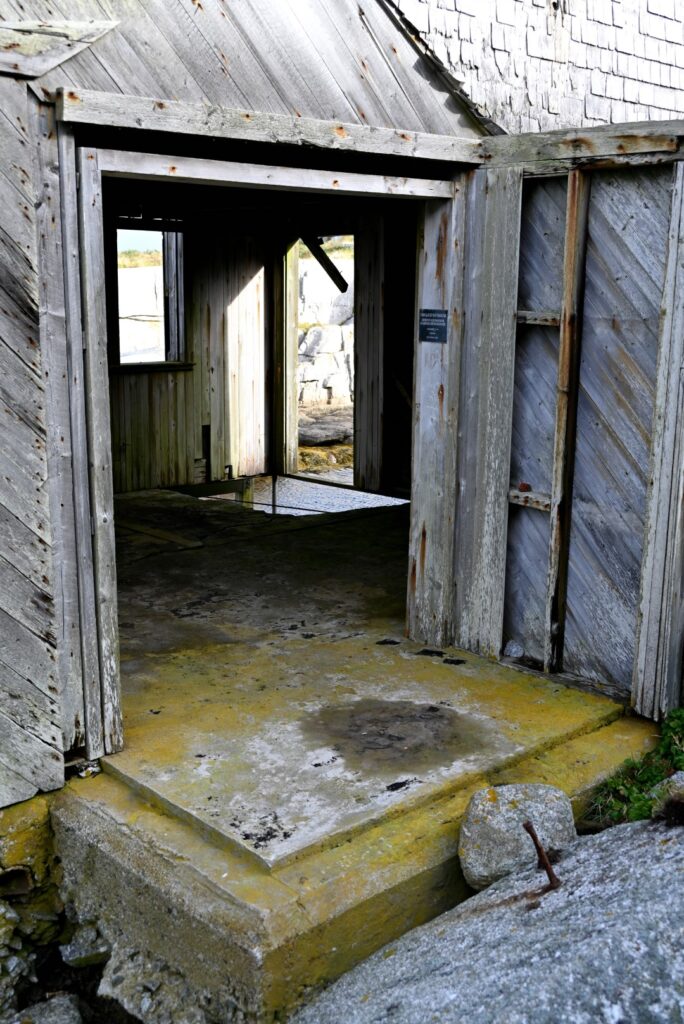
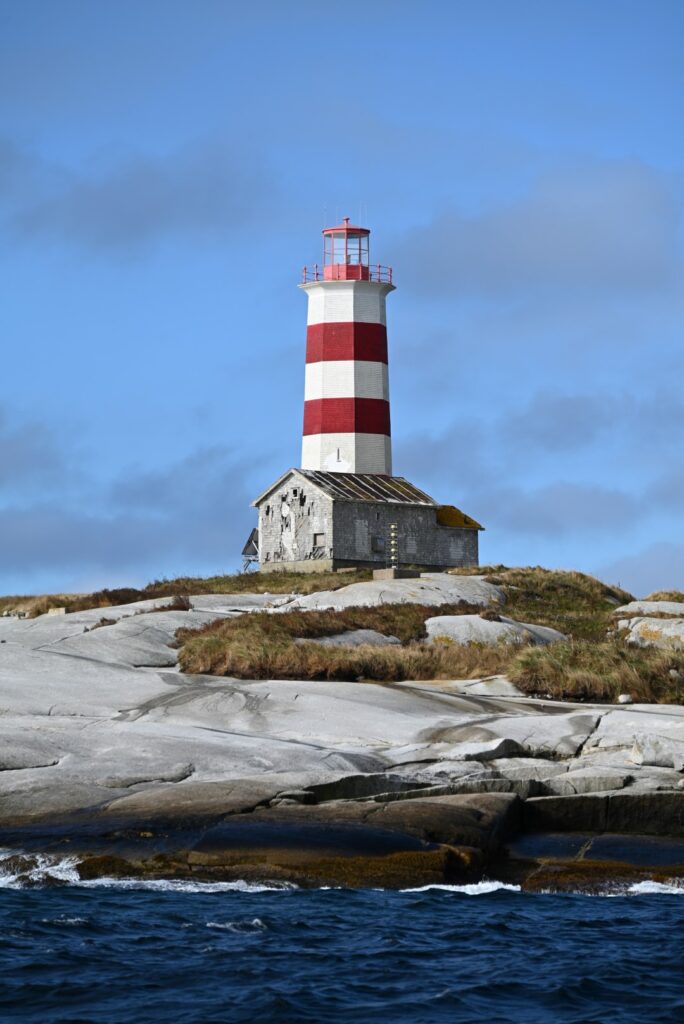
Recognizing its historic significance, the lighthouse was declared a registered heritage structure in 1996. In 1998, the Nova Scotia Lighthouse Preservation Society led restoration work on the lighthouse and nearby keepers’ residences, repairing the lantern room, patching concrete cracks, and boarding up abandoned buildings to prevent vandalism.
After automation, vandalism was not the only risk. In spring 2007, a storm surge damaged the underwater power cable supplying the island. The Canadian Coast Guard temporarily installed a diesel generator before converting the light to solar energy the following year. That same year, the lighthouse was repainted red and white to commemorate its 250th anniversary. Tragically, a few months later, a fire near the former keeper’s houses destroyed them.
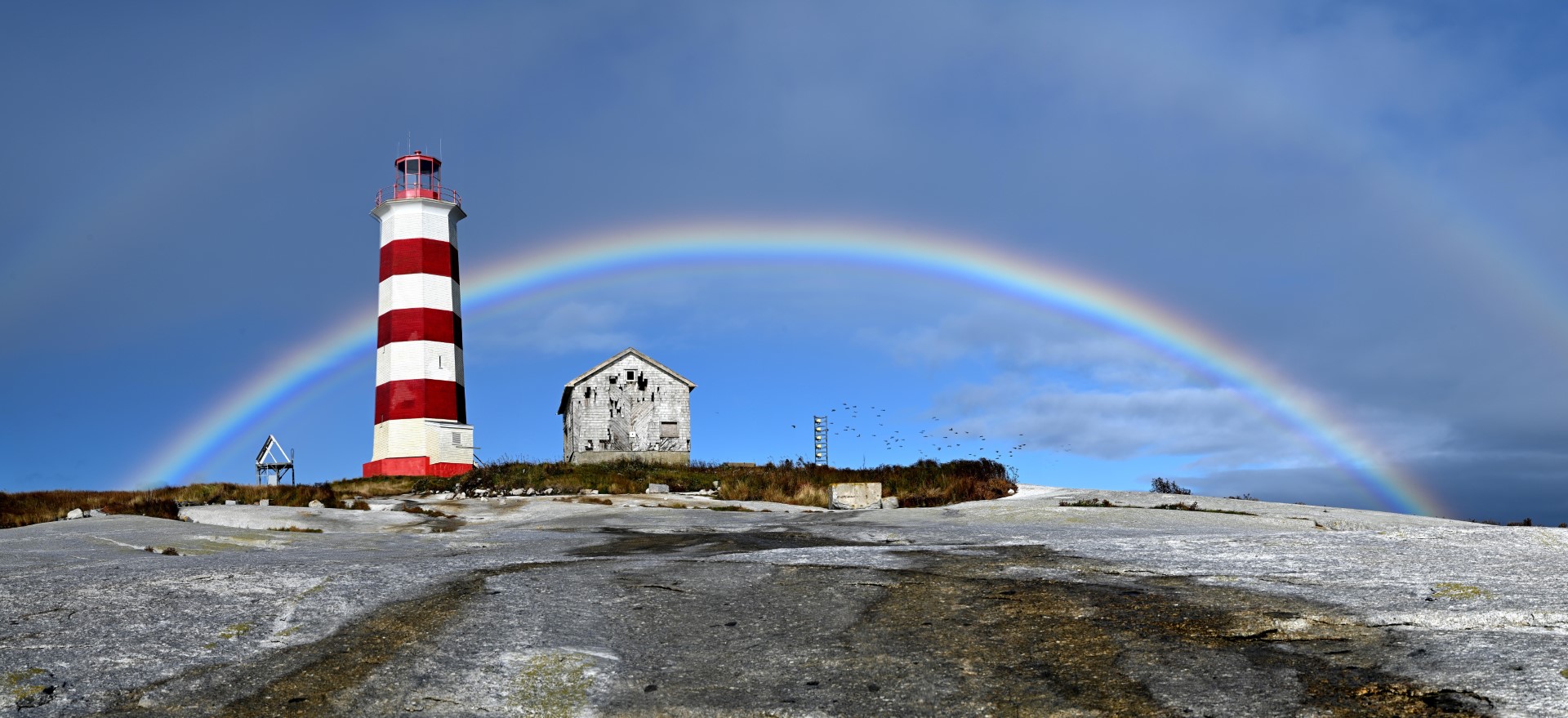
In 2016, the lighthouse underwent a $1.3 million restoration project that included structural stabilization, interior repairs, and repainting of the tower and lantern room. Still in operation today, the lighthouse continues to guide vessels into Halifax Harbour. At more than 265 years old, it is the oldest operational lighthouse in North America and symbolizes the harbour’s pivotal role in the colonization and industrialization of Atlantic Canada. The red and white tower stands resolute above the rough waters of the eastern seaboard. While difficult to access, Sambro Island remains a place well worth the journey—for its history, its culture, and the stories of the lighthouse families who once lived there.
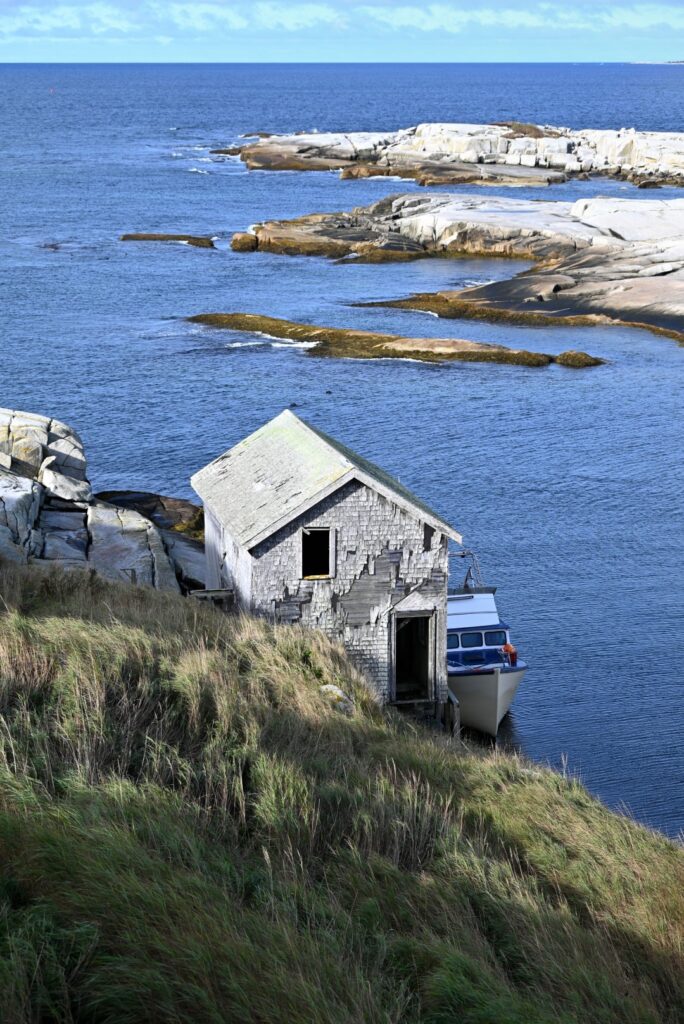
Gas House
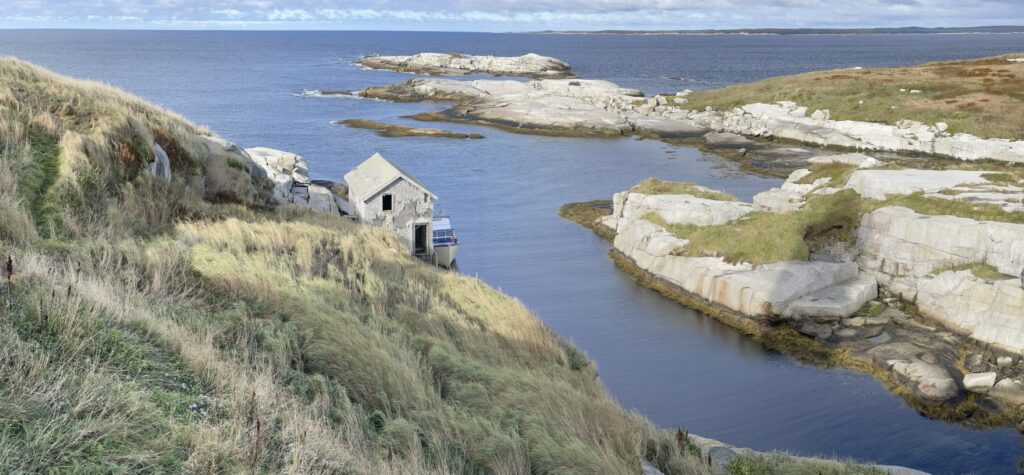
At the center of the island, in a small protected inlet, stands the Sambro Island gas house. This wooden, rectangular building is nestled near the shoreline, supported by a granite stone foundation. Built in 1939, at a time when Halifax Harbour was growing in importance as a naval base, the Canadian government began modernizing lighthouse infrastructure.
The Sambro Island Lighthouse was retrofitted to use refined petroleum products as a light source, necessitating a new building for storage and regulation. The gas house’s location was carefully selected as one of the few places on the island protected from ocean swells and prevailing winds.
Now a recognizable landmark, the gas house has been nationally recognized for symbolizing the modernization of Canada’s lighthouse system in the mid-20th century. In 1996, it was formally recognized as a federal heritage building. Today, the gas house overlooks one of the few safe landing sites on the island and is the first historic structure to greet new visitors.
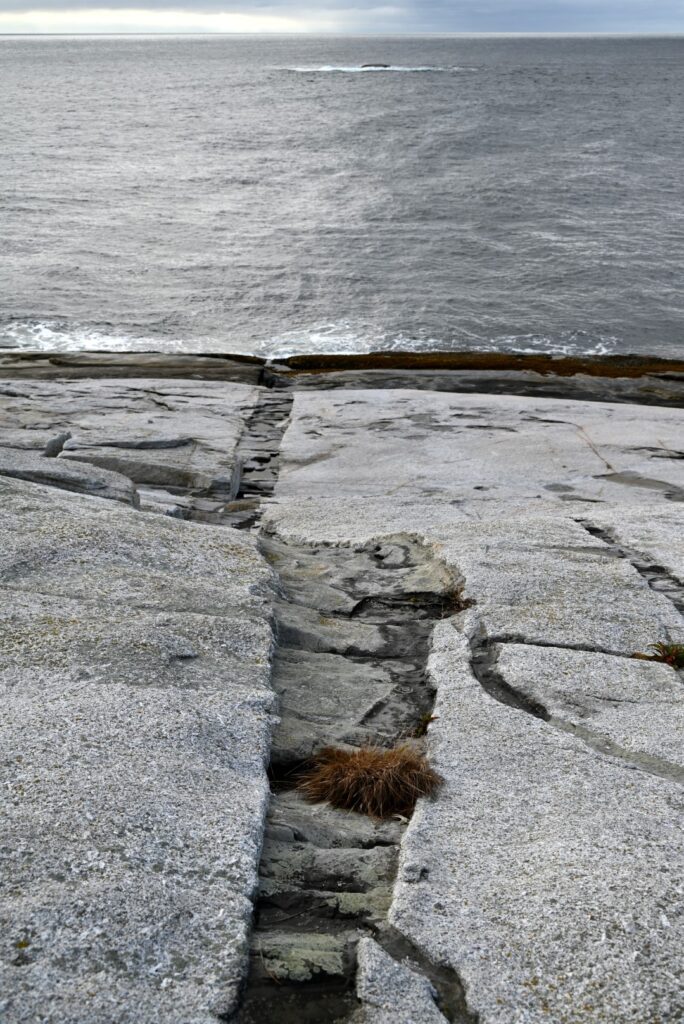
Devil’s Staircase
The geological processes that formed the granite composing Sambro Island also left behind a striking natural feature known locally as the “Devil’s Staircase.” Though it appears man-made—a seemingly perfect pathway etched into solid granite—it is, in fact, a natural intrusion dike. This formation occurred when hot magma pushed through a crack in the granite deep within Earth’s crust, slowly separating the parent rock. As granite is more erosion-resistant than the surrounding rock of the dike, the dike eroded more quickly, leaving behind a sunken formation resembling a staircase.
The Devil’s Staircase can be found on the southwest side of the island, running from the shoreline to the island’s summit. The dramatic feature has long inspired folklore, with many tales describing the Devil himself using the steps to rise from the ocean. Whether myth or geology, the Devil’s Staircase offers a unique window into the island’s volcanic past and centuries of storytelling.
Getting There
As of Summer 2025, Crystal Crescent Charters Ltd., is the only boat‑tour operator in the area offering sightseeing to the island. Contact the operator directly for scheduling, availability, and pricing. Find more information here.
Sources
Nova Scotia Lighthouse Preservation Society. (n.d.). Sambro Lighthouse. Retrieved from https://www.nslps.com/about-ns-lighthouses/lighthouse-lists?c=sambro-lighthouse
Canada’s Historic Places. (n.d.). Sambro Island Lighthouse (Lighttower) (Classified Federal Heritage Building). Retrieved from https://www.historicplaces.ca/en/rep-reg/place-lieu.aspx?id=4426
LighthouseFriends. (n.d.). Sambro Island Lighthouse. Retrieved from https://www.lighthousefriends.com/light.asp?ID=1031
Geocaching.com. (2014, September 29). The Devil’s Staircase (EarthCache) [Geocache GC5DXD9]. Geocaching.com. Retrieved from https://www.geocaching.com/geocache/GC5DXD9