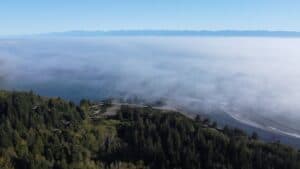
It is a coastline of unparalleled beauty and wonder. On the western side of Cape Chigenecto, between the quiet, yet beautiful coastal community of Apple River and the ghost town of Eatonville, are the famous three sisters rock formations. Oral history by the Mikmaq say these are three sisters turned to stone by Kluskap himself, the three notable sea stacks can be found amidst a collection of incredible coastal rock formations throughout the area. While it has always been a bucket list item of ours to kayak this stretch of coastline, weather and dangerous tidal conditions can make timing a trip here challenging. But on a recent camping trip to the area, we lucked into two days of near-perfect conditions to paddle what can quickly turn into a very treacherous stretch of water.
Normally when spending time on the Bay of Fundy, strong tidal currents are your greatest worry. Granted they are still an important consideration for this paddle, but the open waters surrounding Cape Chignecto means you are spared of the stronger currents the bay is capable of producing. Here the weather and sea conditions play an equal role in posing dangers to paddlers- with an exposed coastal, frequently blanketed in a shroud of fog, swift opposing currents, and few egresses if conditions change quickly.

This is where the rainy weather of May and June can benefit the average paddler, as low clouds and overcast conditions can often bring calm seas with little swell. So were the conditions when we departed.
We departed Spicer’s Beach approximately 30 minutes before high tide. Along Eatonville Road there is plenty of parking and at high tide, the sandy beach makes for a short walk and perfect launch. Following the cove’s vertical cliffs, the paddle begins by exploring sea caves and dramatic cliff faces carved into the fossil laden sandstones. At the northern extent of Spicer’s Cove, a small sea arch marks what feels like the point of no return as after this, it becomes increasingly difficult to get to land in the event the weather makes a turn for the worse. This day, the risk proved worth it, as it becomes clear the Three Sisters are not the only sea stacks, nor only coastal landforms that dot this stretch of coast, numerous sea stack ranging from thick pillars to thin sticks, towering over our little (albeit 17 foot) kayaks beneath.


The words cathedral and tower were exchanged between us rather frequently to describe this wondrous landscape. Just before getting to the Three Sisters, we found ourselves in a maze of rock pillars and outcrops. Additionally, it is here where there is a small sea arch that at high tide can be easily paddled through. While we had no trouble going through when we first arrived, the tide proves to drop at incredible speed and just ten minutes later the arch was dry and impossible.


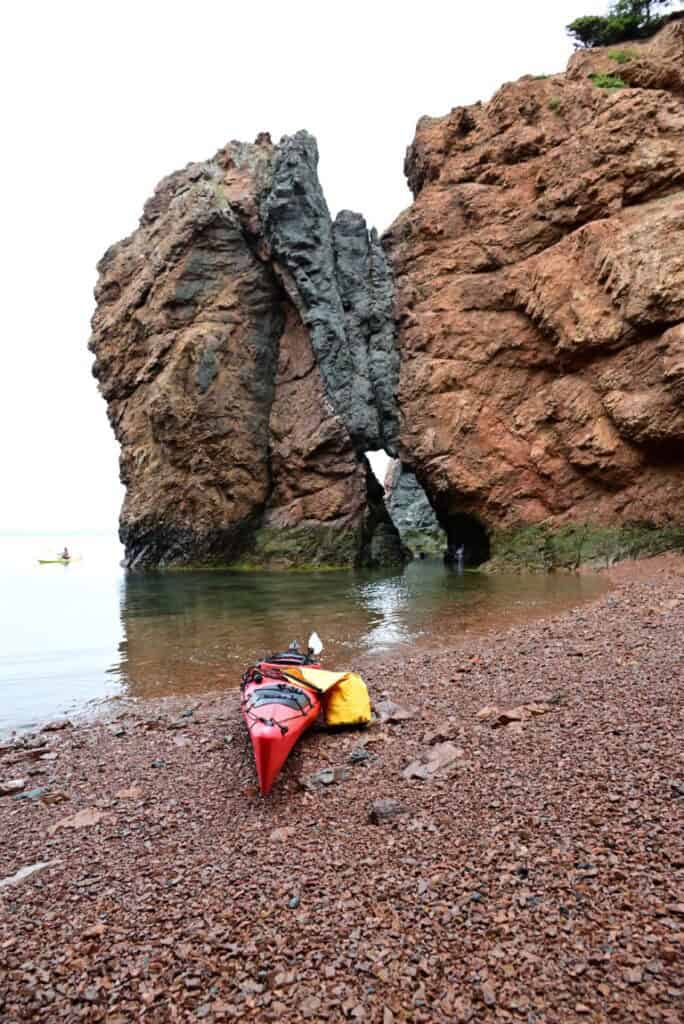
Like the Three Sisters and other features in the area, they are actually ancient remnants of 320–360-million-year-old magma intrusions which were forced through cracks in the crust through tectonic forces.
Finally making the last turn, the three sisters proved every bit as magical as they are described in words and painted in pictures with, their unique shapes give little to question as to why they have been attached to stories since time immemorial. While it is possible to view them from land by hiking in the provincial park paddling beneath them gives a perspective of their significance and magnitude along with the many other ocean carved features found here.

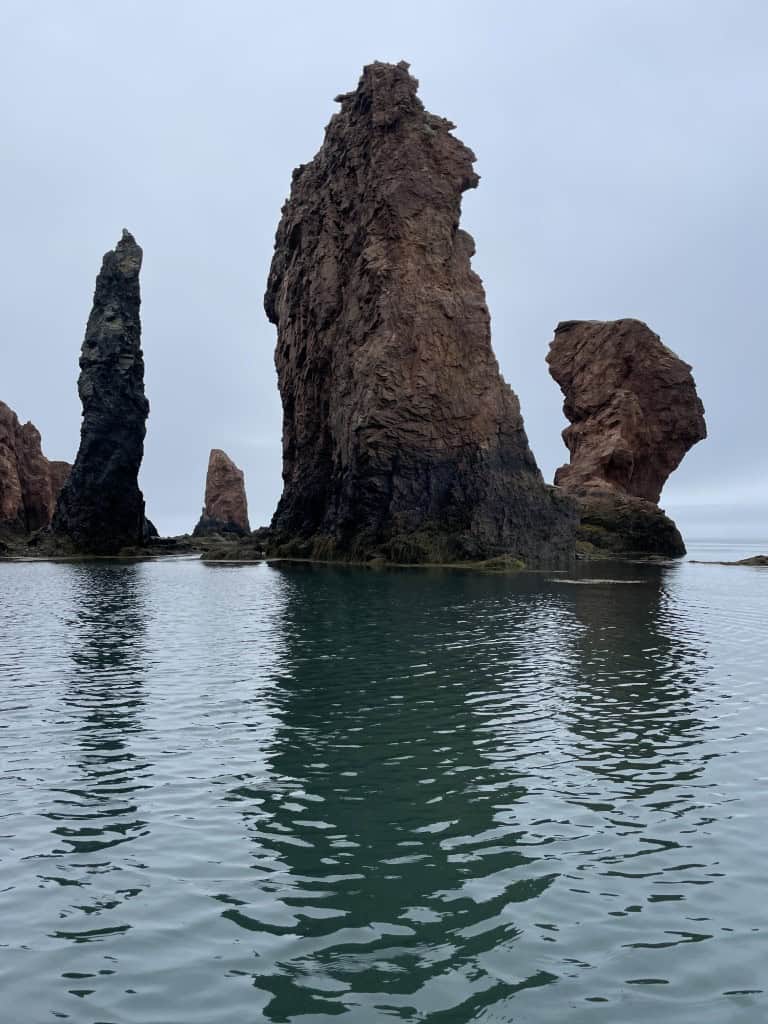
The story of the Three Sisters is best summarized by the Mi’kmawey Debert Cultural Centre, dedicated to sharing and protecting the culture, traditions, and stories of this land’s first and original stewards, the Mi’kmaq.
“According to Mi’kmaw legend, at one time Kluskap became angry with three sisters who were playing a prank on him while he was out hunting Moose. The sisters, who were Puowi-ni’skw—female sorceresses or witch spirits—have the power to turn into different animal spirits. They are also called Shape Shifters. The sisters turned themselves into wolves and chased off Moose who Kluskap was hunting. When Kluskap caught up to the sisters and figured out what they were doing, he turned the three sisters into the three large stone statues that we see today at Cape Chignecto. This rock formation stands on the northwest shore off Cape Chignecto Provincial Park in Cumber- land County, Nova Scotia. Another version of this story goes on to say that Kluskap turned Moose into stone as well; this is Isle Haute.”

Beyond the Three Sisters we captured a sea level view of the famous, former ship building community of Eatonville before turning back just as the winds were starting to pick up.
Paddling back as the tide receded proved to be very different than paddling at high tide. The arch we paddled under was no longer at sea level and the rocky coastline was quite literally getting taller every minute we found ourselves looking up to them. Likewise, the steep, stone beaches which were barely wide enough to fit our kayaks had expanded astronomically.
While we technically ended our paddle where we began, but because of the incredible speed of the tides, we came ashore some 250 meters from where we had put in, on a beach that was now 5-6 times larger than when we had seen just two hours ago.
We had some friends recommend this paddle to us as they had done it a few years ago through Nova Shores Adventures. After we came ashore, the paddle group we had spotted lunching in Eatonville wasn’t far behind us. Briefly speaking with the tour guide and seeing the smiles on the faces of those paddling with him, it reassured us that this paddle is truly one the province’s most incredible natural wonders.