
Before the War
Before 1940, the community of Argentia, located on the shores of Placentia Bay, was a small fishing community with a population of around 500 people. The majority of local residents made a living from the sea, as most Newfoundlanders did. The small, ice-free harbour also attracted the attention of the Newfoundland Railway Company, which established a supply dock in the early 20th century. Coastal steamers shipped supplies into Newfoundland, where they were loaded onto rail cars and transported across the island. The docks helped maintain a healthy economy for the small community. However, it would not be long before this quiet fishing village changed forever.
Destroyers for Bases Agreement
As World War II raged in Europe, the United States began to worry about the possibility of a German invasion of North America. Many believed that if Nazi Germany successfully defeated or bypassed England, the next move Adolf Hitler would make would be to invade the British-ruled island of Newfoundland. Newfoundland’s strategic position in the North Atlantic, due to its proximity to Europe, also made it a necessary stopover and rally point for aircraft and warships heading to the European theatre.
Meanwhile, the Battle of the Atlantic intensified as Germany attempted to sever North America from Europe and dominate the Atlantic Ocean. Britain was losing the battle, as German U-boats were sinking supply and warships crossing the ocean. British Prime Minister Winston Churchill needed American warships to counter the German threat, while U.S. President Franklin D. Roosevelt needed Newfoundland’s strategic location to defend against and fight Germany.
On September 2, 1940, the two countries reached an agreement known as the Destroyers for Bases Agreement. In exchange for 50 aging Caldwell-, Wickes-, and Clemson-class destroyers, the United States was granted 99-year British land leases on sites across Newfoundland.
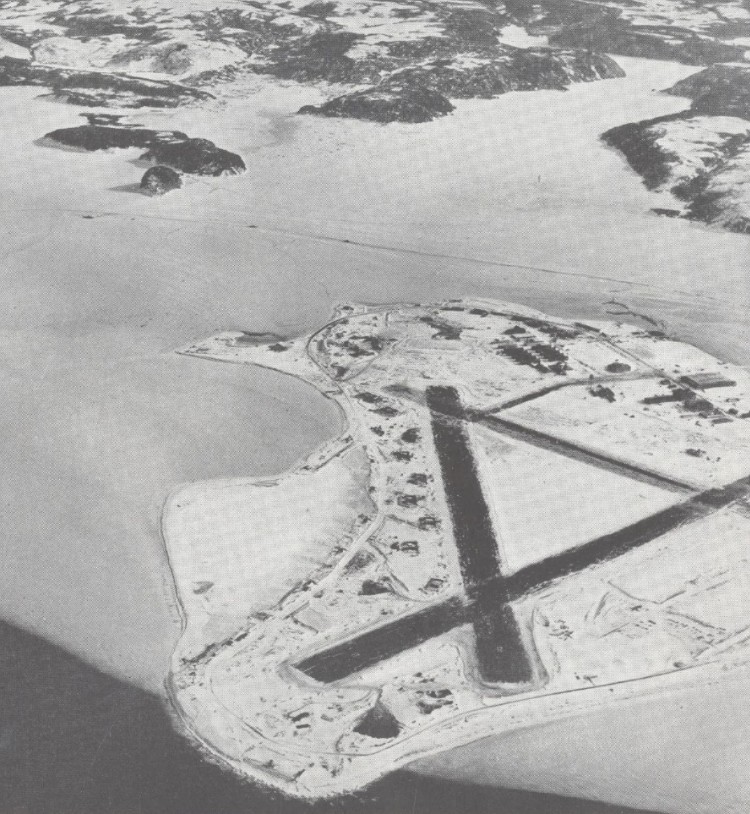
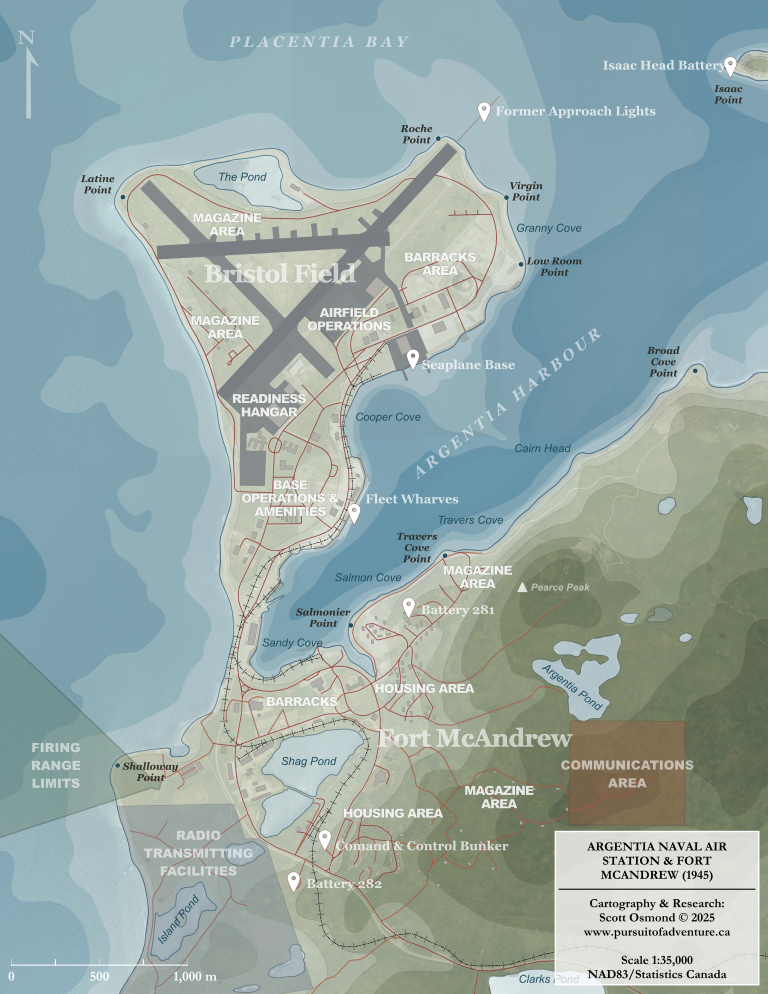
As part of the agreement, 3,392 acres of land, most of it on a large peninsula extending into Placentia Bay—were selected as the site for a new Naval Air Station. The area was chosen for its large, flat, and easily defensible terrain, as well as for its nearby rare ice-free harbour that was deep and large enough to accommodate naval vessels.
The “Friendly Invasion” Begins
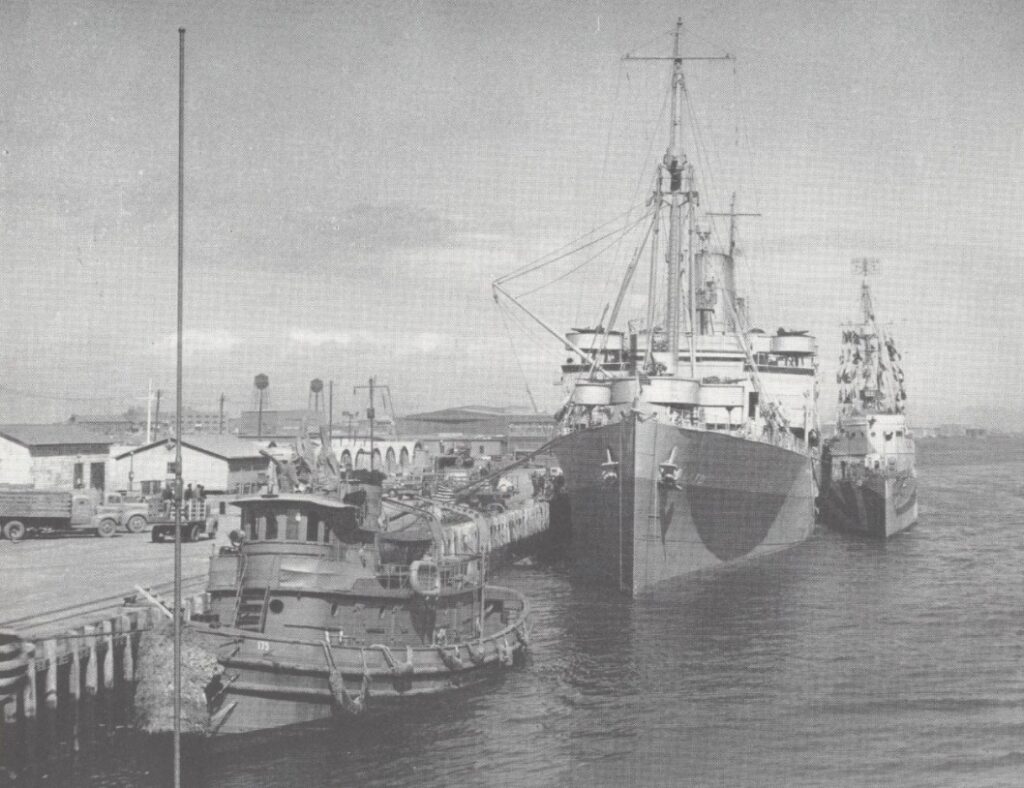
Immediately following approval of the Destroyers for Bases Agreement in September 1940, the United States Department of Defense began surveying locations for air force and naval bases. On October 13, 1940, the first U.S. Army Corps of Engineers personnel and civilian hydrographers and surveyors arrived at Argentia aboard the USS Bowditch. The next ship to arrive was the USS Richard Peck, which entered the harbour on January 18 carrying approximately 1,500 construction workers and engineers. The Richard Peck remained tied up at the docks in Argentia, serving as temporary barracks until permanent facilities were constructed nearly two years later.
As construction progressed, nearly 750 people living in the communities of Argentia, Marquise, and surrounding areas were given notice to relocate. Although saddened by the displacement, reports indicate that residents cooperated fully and generally remained in high spirits. This was likely due to the expectation that construction and operation of the base would provide thousands of much-needed jobs and improve the island’s struggling economy. It is believed that nearly 20,000 Newfoundlanders found employment during the construction of the base.
Photo Source: United States. Navy. (c. 1946). Argentia: Sentinel of the North Atlantic [Photographic book]. s.n. https://dai.mun.ca/PDFs/cns/ArgentiaSentinelOfTheNorthAtlantic.pdf
Construction crews moved quickly in building the approximately $53 million base and airfield, which soon became the most expensive American overseas military installation constructed during World War II. The project resulted in three runways measuring roughly 5,500 feet, 5,300 feet, and 7,000 feet in length, as well as more than 2,000 feet of wharf, a floating dry dock, hangars, living quarters, and storage facilities for 15 million gallons of gasoline, oil, and jet fuel. A railway branch line was also built to connect the base to the national railway network. The largest challenge was moving and compacting 8.5 million cubic feet of peat, gravel, and rock to construct the airfield and runways.
On January 25, the first all-military troops arrived at Argentia, and three days later construction on the base is believed to have begun. On February 13, U.S. Marines officially raised the American flag at Argentia for the first time.
On July 15, 1941, Naval Operating Base Argentia was officially commissioned, followed by the commissioning of Naval Air Station Argentia on August 28. On August 10, British Prime Minister Winston Churchill and American President Franklin D. Roosevelt met near Argentia at Ship Harbour, where they drafted the Atlantic Charter. The declaration outlined principles for maintaining peace after the war and is widely regarded as a foundation for the United Nations Charter. Although not formally signed there, the area is recognized for the significance of these discussions.
Naval and air operations began immediately. Navy ships were supplied and assembled at Argentia before crossing the Atlantic to protect supply and passenger vessels from enemy U-boats. Coastal patrol and anti-submarine aircraft also began operating along the coast.
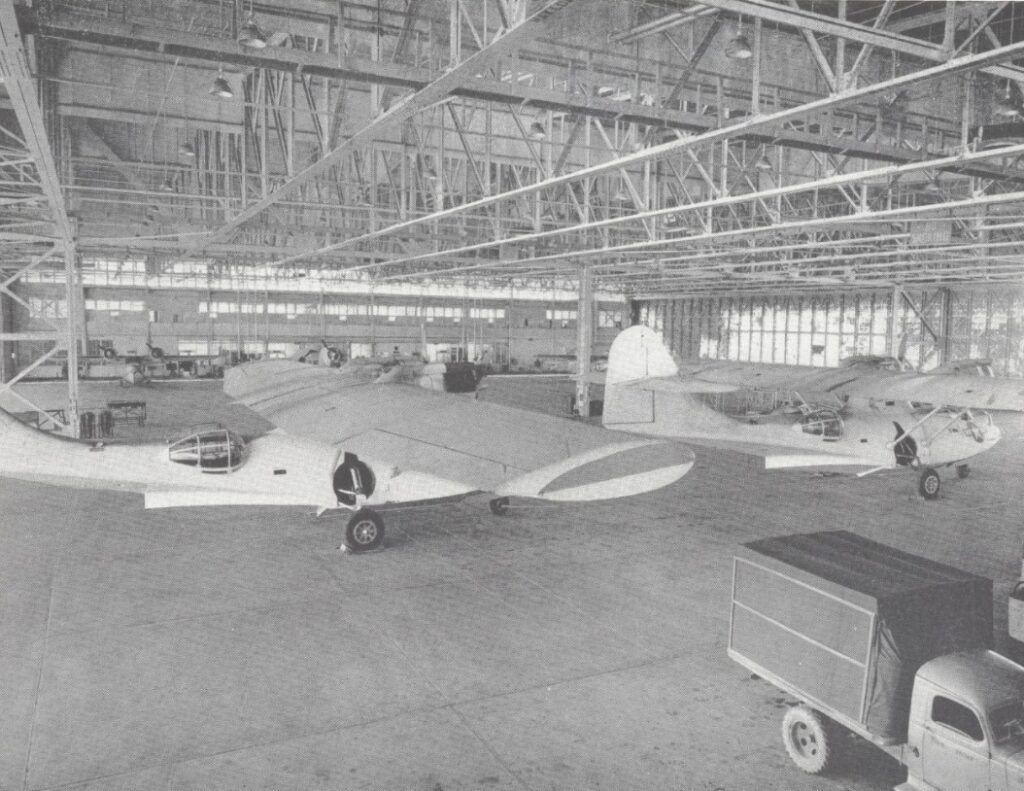
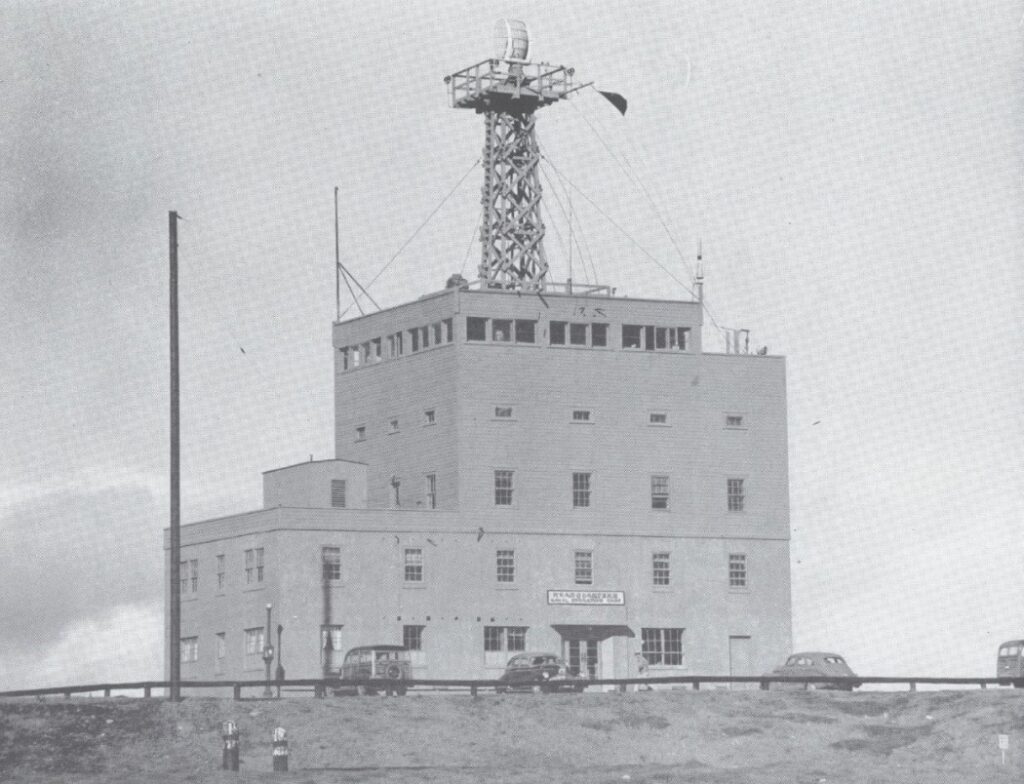
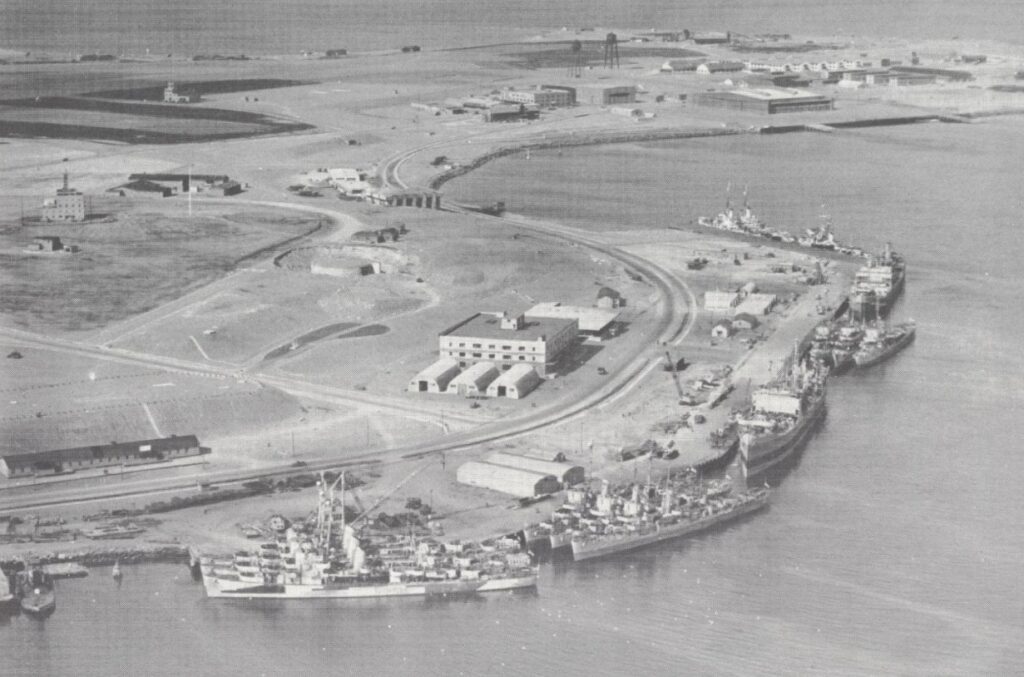
Source: United States. Navy. (c. 1946). Argentia: Sentinel of the North Atlantic [Photographic book]. s.n. https://dai.mun.ca/PDFs/cns/ArgentiaSentinelOfTheNorthAtlantic.pdf
Fort McAndrew Established
In March 1942, the United States Army established a base on the mainland near Naval Air Station Argentia. Named Fort McAndrew, its primary purpose was to provide security for the naval base through anti-aircraft defenses. The fort also housed an infantry company, a coastal artillery group, and an anti–motor torpedo battalion.
Although Argentia was primarily an American base, Britain’s Royal Navy is also believed to have established a small maintenance facility there to service ships involved in convoy escort operations.
In the spring of 1943, a 7,000-ton floating dry dock was installed to assist with naval ship repairs. By this time, thousands of U.S. Navy, Marine, and Army personnel had passed through Argentia en route to Europe, and by the end of the war in 1945, more than 10,000 troops had transited the base.
With the end of the war, personnel numbers at Argentia declined rapidly, and it appeared the base might soon be closed. However, a new and potentially more devastating conflict—the Cold War—was emerging, and Argentia lay directly within its strategic sphere.
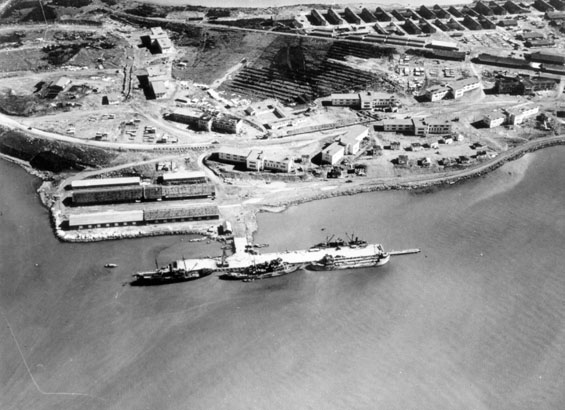
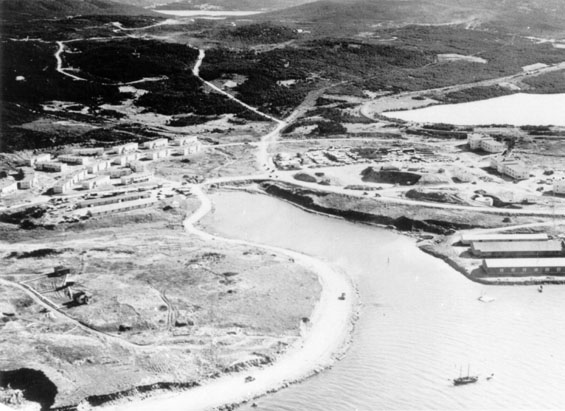
Cardoulis, J. (Collector). (n.d.). John Cardoulis Photograph Collection [Photographs]. Maritime History Archive, Memorial University of Newfoundland. https://www.mun.ca/mha
The Cold War
After World War II, Naval Air Station Argentia entered a new era of warfare. Although activity initially slowed, rising tensions between the United States and the Soviet Union led to renewed expansion and development. In 1946, Fort McAndrew was transferred to the U.S. Army Air Forces and renamed McAndrew Air Force Base in 1948. By this time, nearly 7,000 naval and marine personnel were stationed at Argentia.
Once again, Argentia’s strategic location in the North Atlantic made it a focal point for patrol and surveillance. Soviet nuclear submarines were viewed as the greatest threat to the United States, prompting the installation of advanced radar and surveillance systems. One such system was the highly classified SOSUS (Sound Surveillance System), designed to detect and track Soviet submarines and naval vessels attempting to cross the Atlantic.
American forces increased again in 1950 with the outbreak of the Korean War. After the conflict ended, personnel levels steadily declined. In 1955, McAndrew Air Force Base was decommissioned and its facilities transferred back to the U.S. Navy, with most Air Force personnel relocated to other bases, including Harmon Air Force Base in Stephenville.
In 1958, Argentia was assigned a role supporting the 64th Air Division and NORAD, both of which operated early-warning radar systems and fighter squadrons tasked with intercepting unidentified or hostile aircraft.
Nearing the End
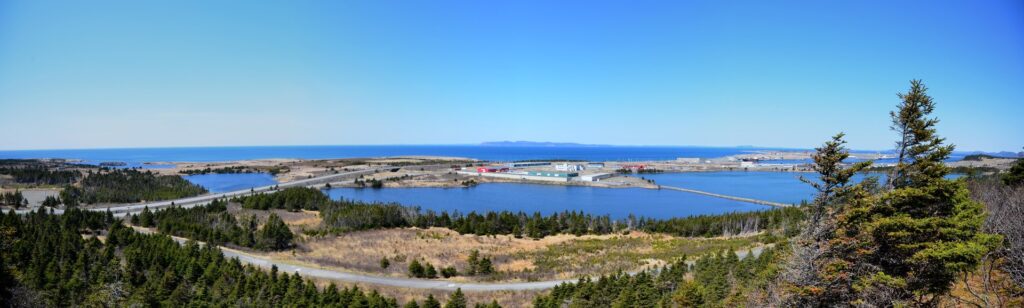
Argentia continued to play an important role in monitoring Soviet activity in the Atlantic and serving as a refueling point for naval ships and aircraft in the following decades. However, as newer radar systems were deployed and aircraft range capabilities increased, the base gradually became obsolete. As a result, Naval Air Station Argentia was decommissioned in 1973, and in 1975 the land was transferred to the Canadian government and later to the Government of Newfoundland.
The U.S. Navy continued to operate several facilities in the area until 1994, when it fully withdrew and officially decommissioned Naval Station Argentia. During the decommissioning process, ownership of remaining buildings was transferred to the federal government. It was reported that many structures containing sensitive or classified equipment were demolished by the United States prior to relinquishing control of the site.
Sources & Further Exploring
282 Coastal Defence Battery Registered Heritage Structure. Canada’s Historic Places website found at www.historicplaces.ca/en/rep-reg/place-lieu.aspx?id=3843.
Cardoulis, J. (1990). A Friendly Invasion: The American Military in Newfoundland, 1940-1990. St. John’s, N.L.: Breakwater.
Clearwater, John. (1999). U.S. Nuclear Weapons in Canada. Toronto, CA: Dundurn.
Fitzgerald, J. (2010). Battlefront Newfoundland: Britain’s oldest colony at war, 1939-1945. St. John’s, NL: Creative Book Pub.
Find out more about the Argentia Naval Base and more by exploring the Naval History and Heritage Command’s website found at www.history.navy.mil.
Ray, W. (2016). US Military Bases in Eastern Canada: Harmon, Pepperrell and Argentia. London, ON: HMS Press.
Smallwood, J. R., & Pitt, R. D. W. (1981). Encyclopedia of Newfoundland and Labrador. St. John’s, N.L.: Newfoundland Book Publishers. (Article: “Argentia”. Available online through the Centre for Newfoundland Studies collections database)