
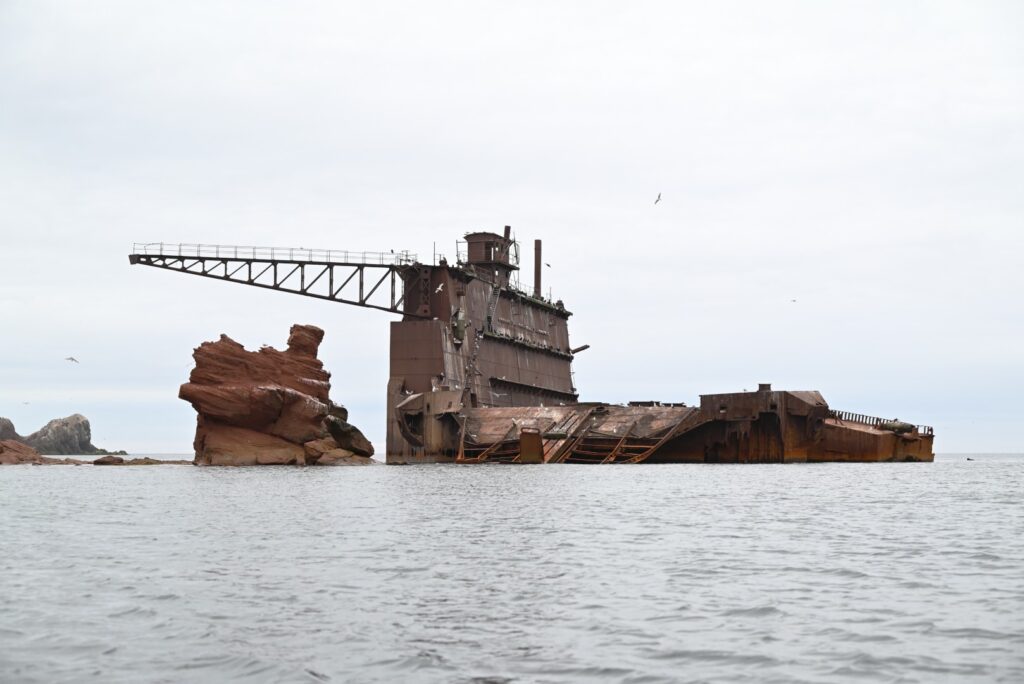
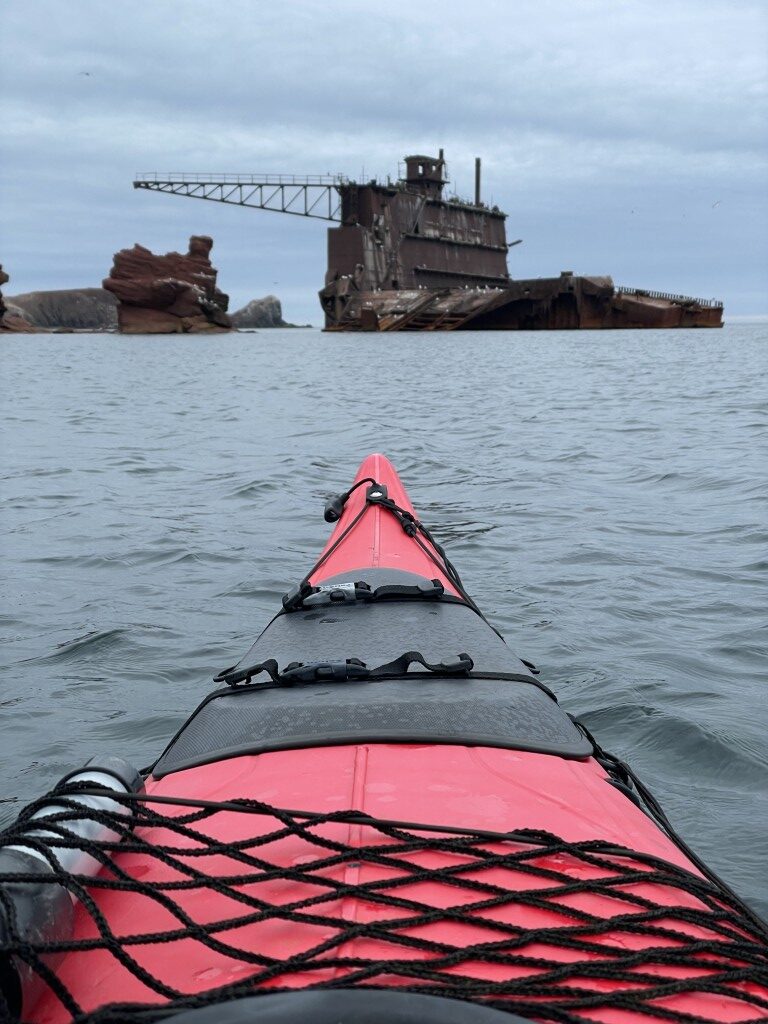
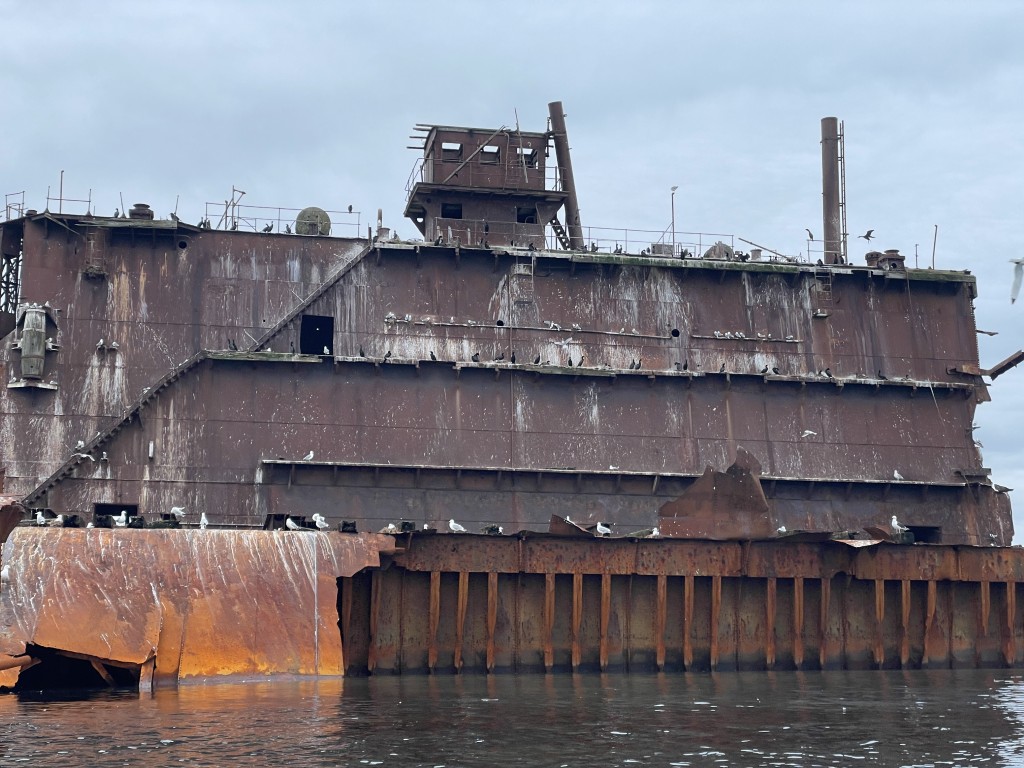
In the community of L’Étang-du-Nord on the Îles-de-la-Madeleine lies one of the largest shipwrecks in Atlantic Canada. The Duke of Connaught was a floating dry dock, built to aid in the repair and maintenance of ships and vessels. This enormous steel structure was wrecked in 1988 when its towlines broke during a storm, forcing it onto the rocks south of the community’s small harbour.
The ship’s story begins in 1907, when the British company Vickers Sons & Maxim began exploring locations for a shipyard in Montreal to repair ocean-going ships. Specializing in shipbuilding and weapons manufacturing, the company identified a location between Notre-Dame Street and Viau Street. The Canadian government subsequently invited the company to serve as a contractor for the repair and maintenance of Royal Canadian Navy vessels. In June 1911, the company reorganized under the name Vickers Limited, and one of its first undertakings was commissioning the construction of a floating dry dock.
Vickers Limited built the dry dock at its shipyard in England. Completed in 1912, the steel vessel measured 183 metres in length and 41 metres in width, with 17.7-metre-high steel walls on either side. Two cranes were mounted atop the walls at the front of the dock.
Towering over the deck, the starboard wall housed the ship’s boiler and pump room, which could pump large volumes of water into any of the 48 ballast tanks located beneath the deck. Once the tanks were flooded, the dock would slowly sink below the waterline, allowing a ship in need of repair to be floated inside. After repairs were completed, the water would be pumped out, raising the dock and allowing the vessel to sail out. Upon its completion in 1912, the dry dock was towed across the Atlantic Ocean to Montreal—reportedly the largest dry dock ever to make the transatlantic journey at the time.
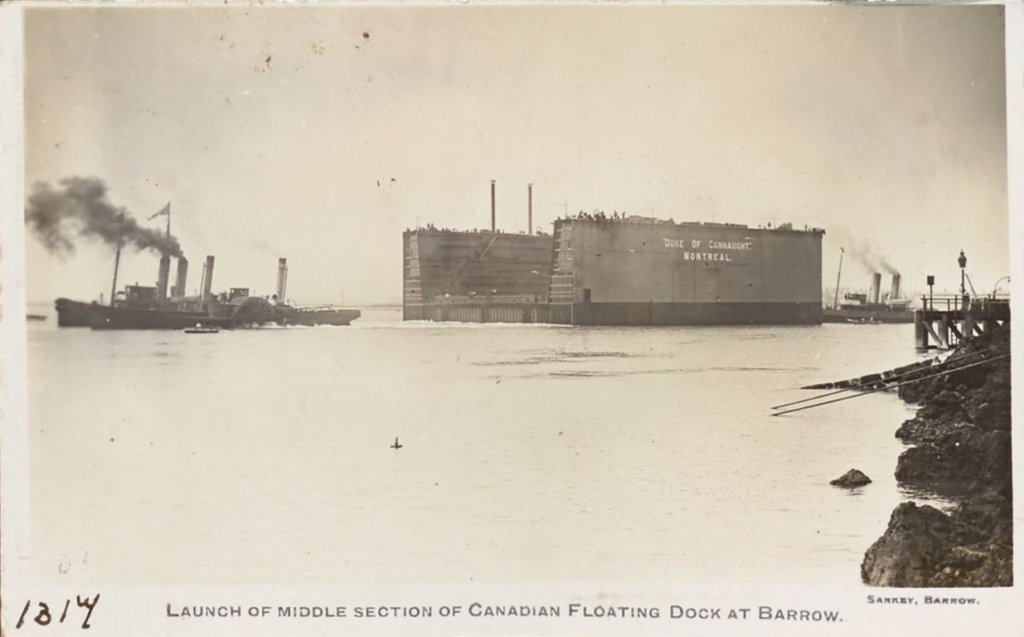
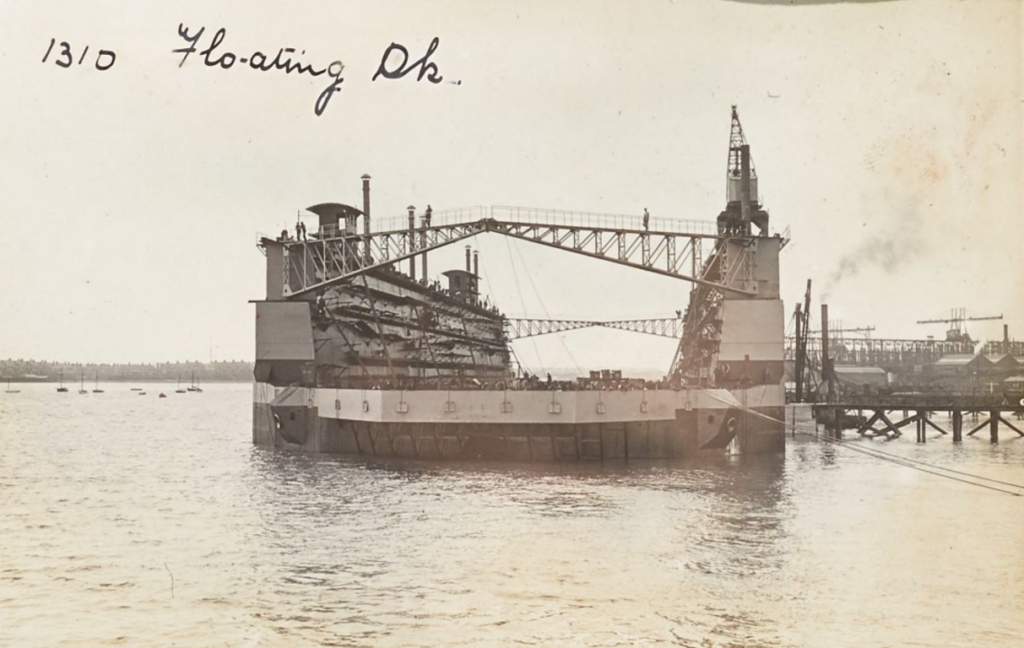
Find these photos and more from The Sankey Photography Archive here.
The opening of the shipyard and the addition of the Duke of Connaught coincided with the onset of the First World War. Business boomed over the next four years, as the dry dock was used to repair, build, and maintain navy ships, submarines, cargo vessels, and ocean liners. During the war, the company helped transform Montreal into one of Canada’s busiest shipbuilding centres. Although demand slowed following the war, the shipyard remained active, constructing icebreakers, yachts, and various military ships.
A notable incident occurred in 1932. While the oil tanker Cymbeline was being raised in the dry dock, it began leaking oil. The crew opened several of the dry dock’s ballast tanks to contain the oil, believing them to be airtight and watertight. Over the following month, an estimated 100 workers carried out repairs on the tanker. On June 17, shortly before the work was to be completed, two explosions erupted from the dry dock—later attributed to a spark igniting the trapped oil in the ballast tanks. The explosions tragically killed 15 workers as fire engulfed the vessel. The Montreal Fire Department responded quickly. However, an hour later, while the fire was being brought under control, a third explosion occurred, killing four firefighters, including Fire Chief Raoul Gauthier. The disaster reverberated throughout the city. After several more hours of relentless firefighting, the fire was finally brought under control and extinguished, but the damage had been done.
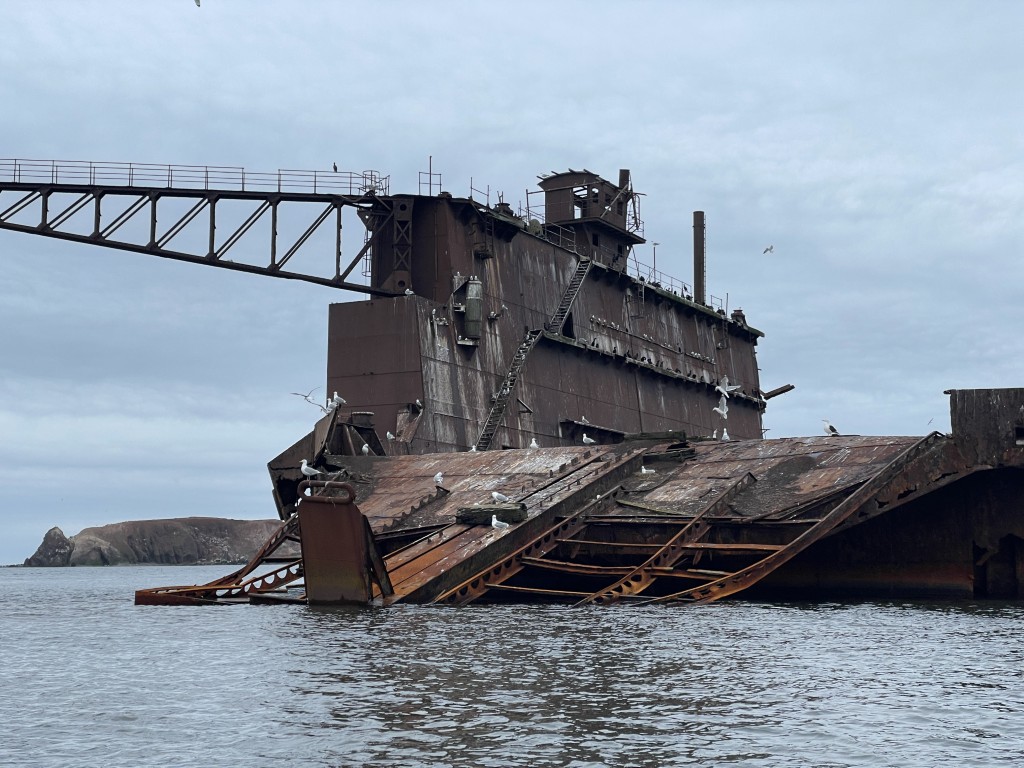
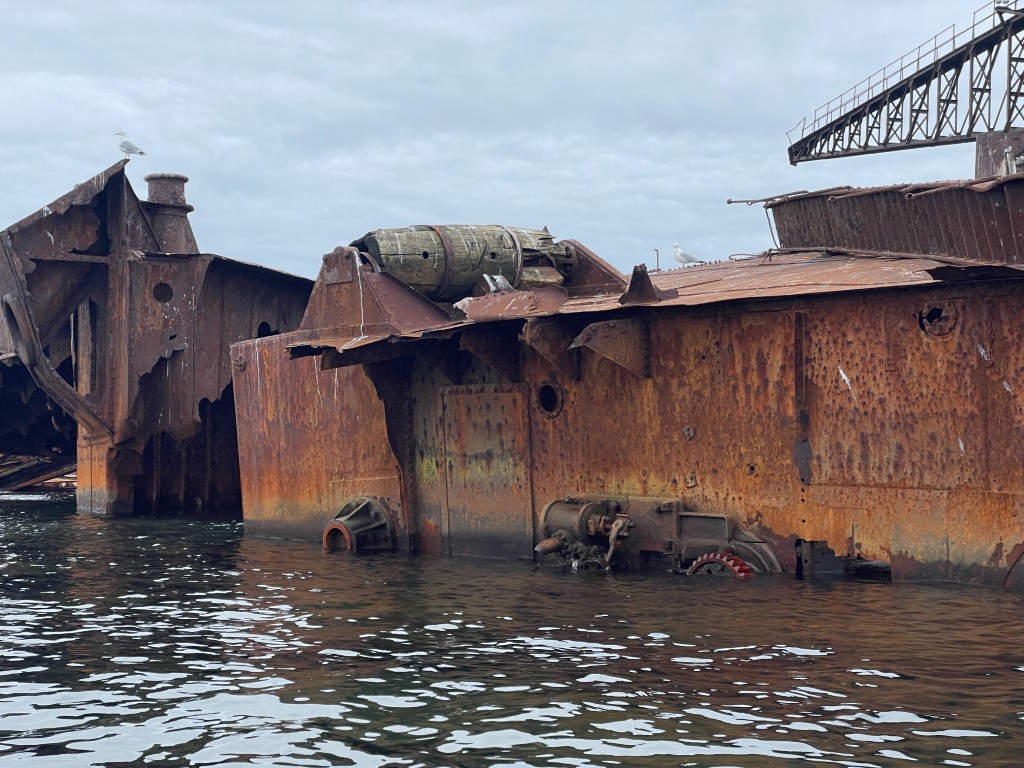
The dry dock was subsequently repaired and returned to service. It continued to operate through the Second World War and into the latter half of the twentieth century. The parent company, Vickers Limited, changed ownership several times during the 1980s and ceased operations in 1988. Following the closure of the shipyard, the Duke of Connaught was sold to a scrapyard in Sydney, Nova Scotia, where it was scheduled to be dismantled. On November 22, 1988, while being towed from Montreal to Sydney, the dry dock encountered an early winter storm. High winds and waves broke the towlines, leaving the structure adrift. It soon ran aground on the rocks near L’Étang-du-Nord. Deemed too expensive to salvage, the wreck was abandoned.
Though deteriorated, the ship remains upright. One wall and its attached crane are still intact, a testament to the vessel’s solid construction. Several years ago, the port wall broke free, floating several kilometres north before grounding on a nearby beach. The dry dock continues to tower over the adjacent fishing harbour and remains a spectacular, awe-inspiring sight. Its unique history and design are remarkable, but it is the sheer size and presence of the wreck that makes it a must-see destination when visiting the Îles-de-la-Madeleine.
Baulne, S. A. (1933). Report of the Commissioner in the matter of the investigation into the circumstances attending the explosion in the drydock of Canadian-Vickers Limited, Montreal, June 17, 1932. Privy Council Office, Government of Canada. https://epe.lac-bac.gc.ca/100/200/301/pco-bcp/commissions-ef/baulne1932-eng/baulne1932-eng.pdf?nodisclaimer=1
Signal Film & Media. (n.d.). Album 08 1035–1332 [Photographic archive collection page]. The Sankey Photography Archive. Cumbria Archives. https://www.sankeyphotoarchive.uk/collection/view/?id=10781