It is known as the Merritton Tunnel, Grand Trunk Railway Tunnel, and more informally, the Blue Ghost Tunnel, but no matter what you call it, the stone-lined tunnel that travels beneath the now-abandoned Third Welland Canal is both a popular and elusive historic site for explorers in Southern Ontario. The Merritton Tunnel is a forgotten relic of the pioneering days of transportation and engineering on the Niagara Peninsula. Today, it remains one of the region’s more intriguing historic railway structures, but its location within the restricted lands surrounding the modern-day Welland Canal and its adjacent water reservoirs makes it inaccessible to the public without prior permission from the St. Lawrence Seaway Management Corporation.

The Story of Blue Ghost Tunnel
In the early 1870s, the Second Welland Canal weaved its way through St. Catharines, making use of natural waterways such as Twelve Mile Creek and the river valleys that cut through the heart of the city. Looking to establish a more direct route between Lake Ontario and Lake Erie, while increasing the size of ships able to pass through the canal, engineers began looking for a new route for the waterway to follow. In 1872, construction began on the Third Welland Canal, following a new alignment to the east of St. Catharines and toward Thorold. By taking advantage of the more direct route and the surrounding landscape, the canal could be made wider, deeper, and more efficient than its predecessors.
In the northeastern corner of Thorold, the new canal cut through a number of existing roads and railway lines. One of these was the Great Western Railway, which, following the opening of its Niagara line in 1853, had become an important transportation connection between Hamilton, Niagara Falls, and the United States. To remedy the problem, designers initially proposed constructing a swing bridge over the canal. However, concerned about the delays and potential dangers associated with stopping trains whenever ships passed through, the railway favoured a different approach. Instead, it was decided to construct a stone-lined tunnel underneath the canal, between Locks 18 and 19, allowing trains to pass without interrupting either railway or canal traffic.
Construction of the tunnel was undertaken by the Great Western Railway under the direction of engineer Francis Shanly. Rather than excavating through solid rock, workers constructed the tunnel using a method known as cut-and-cover. A large trench was excavated along the proposed railway alignment, before the tunnel’s arched roof and walls were constructed using carefully cut limestone blocks quarried near Queenston. Once the masonry was completed, the tunnel was buried beneath earth and the canal was constructed above it.
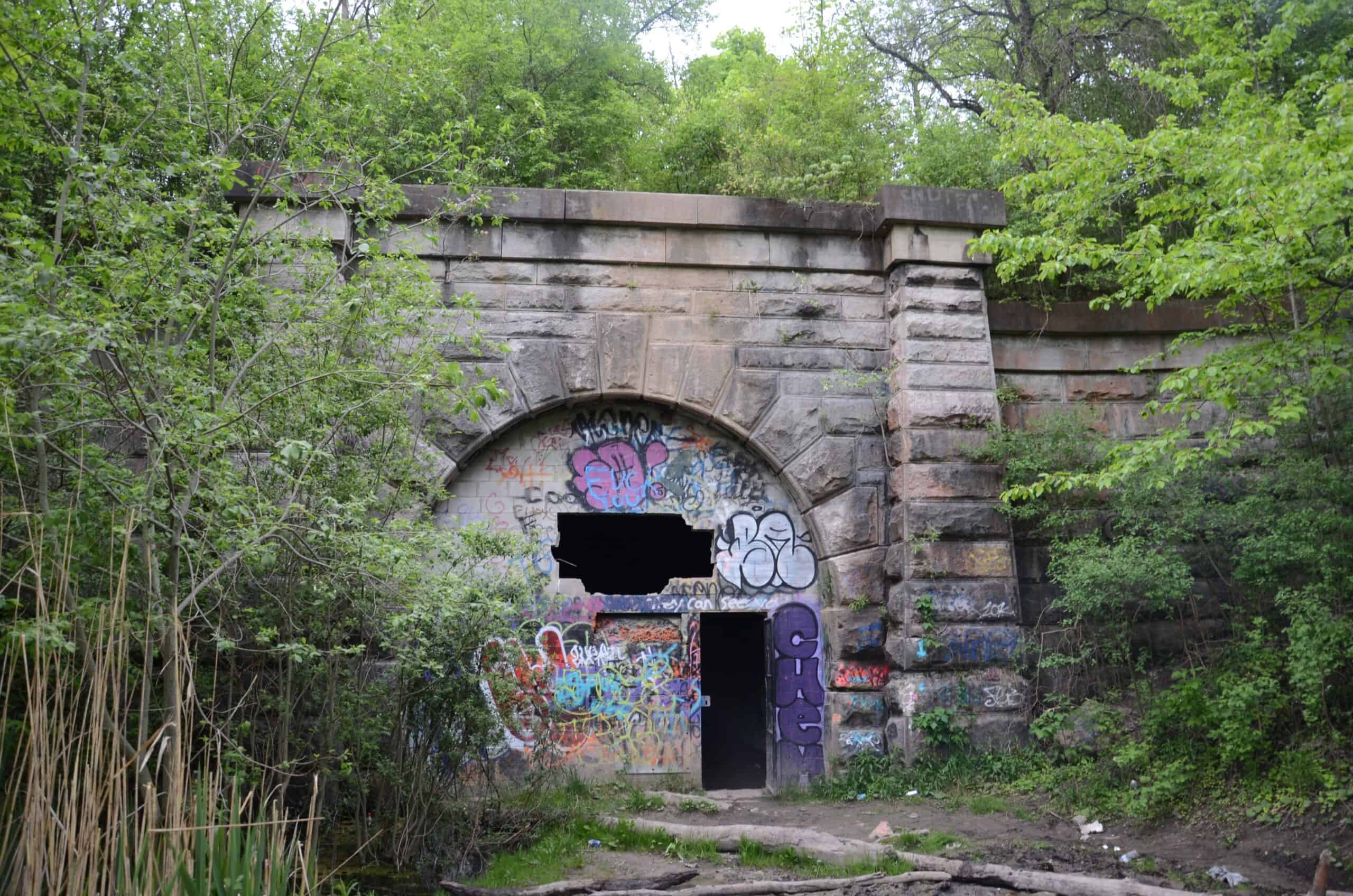
The resulting tunnel measured approximately 217 metres (713 feet) from end to end, including its stone entrance structures, with an interior approximately 4.9 metres wide and 5.5 metres high. Rather than following a straight alignment, the tunnel curved gently beneath the canal, allowing the railway to reconnect with its original route on either side. Despite the relatively short distance, a tremendous amount of manual labour went into its construction, with workers relying heavily on picks, shovels, and horse power to complete the excavation and masonry work.
Constructing a railway tunnel directly beneath a major shipping canal was no small engineering feat, particularly during the late nineteenth century. Engineers had to design a structure capable of supporting the tremendous weight of the earth and water above it, while maintaining sufficient clearance for locomotives and railway cars to pass through. Making the task even more challenging was the fact that the tunnel passed beneath the canal between Locks 18 and 19, where historical accounts suggest that as little as three feet (0.9 metres) of earth separated the tunnel’s stone roof from the water above. The carefully constructed limestone arch was essential to the tunnel’s strength, distributing the weight of the surrounding material down through its walls and into the foundations below. Water infiltration was another major concern, as any leakage through the surrounding earth and masonry could threaten the tunnel’s long-term stability.
The tunnel officially opened to railway traffic in February 1881, coinciding with the completion of the Third Welland Canal. While it was considered an impressive engineering achievement for its time, the tunnel’s narrow width, limited overhead clearance, and single railway track would eventually become significant limitations.
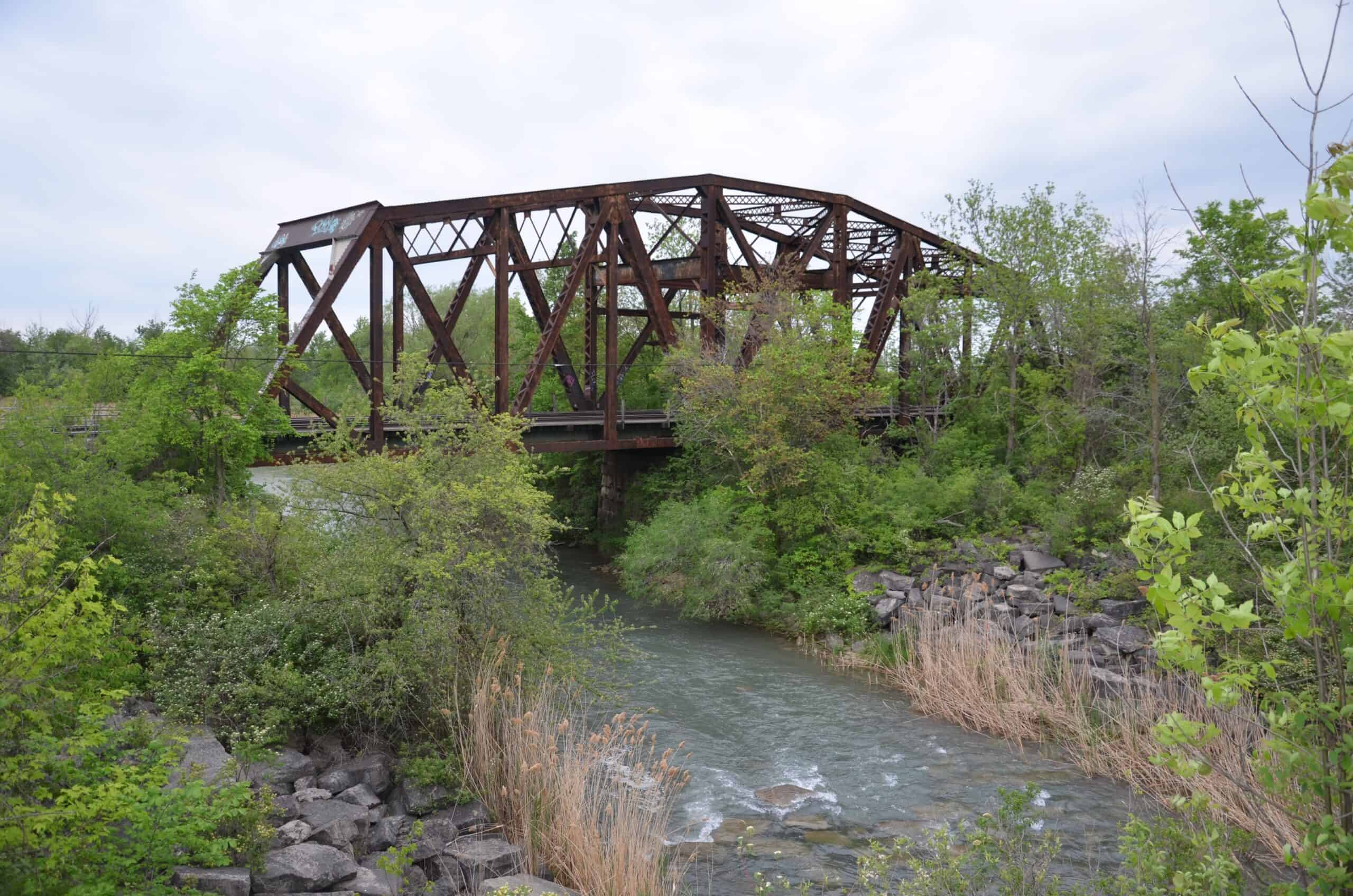
The efforts to construct the tunnel were, in some ways, short-lived. As railway traffic increased and locomotives became larger, the demand for a double-track railway made the tunnel increasingly impractical. Constructing a second tunnel would have been a difficult and expensive undertaking, so railway operators eventually returned to the original idea of building a bridge over the canal. A large steel swing bridge was constructed near Lock 17, allowing trains to cross the canal above the water while still permitting ships to pass whenever the bridge was opened.
By 1915, the Merritton Tunnel had been taken out of regular railway service, and the surrounding railway alignment was abandoned. For a time, the tunnel continued to be used by local farmers to move livestock between fields on opposite sides of the canal, but eventually even this use came to an end. With the opening of the Fourth Welland Canal in 1932, the old waterway and its associated infrastructure gradually faded into history.
Despite its abandonment, the tunnel would eventually attract a new kind of attention. Its isolated location, dark interior, and association with a number of railway accidents helped establish its reputation as one of the Niagara Peninsula’s supposedly haunted locations. The most notable accident occurred on January 3, 1903, when two locomotives collided head-on near the tunnel’s western entrance, killing two railway firemen. Over time, stories of ghostly figures and mysterious blue mist helped earn the structure its popular nickname, the Blue Ghost Tunnel.
In 2005, efforts were made to stabilize the tunnel with the hope of eventually incorporating it into a heritage hiking trail. A raised wooden floor and additional supports were installed in sections of the tunnel to help reinforce the aging structure. However, continued water infiltration, flooding, and concerns over the deterioration of the masonry made the project increasingly difficult and costly to maintain. The proposal was eventually abandoned.
By 2006, the tunnel’s growing popularity among local explorers, combined with concerns over its deteriorating condition, prompted the St. Lawrence Seaway to seal the western entrance with a masonry wall. However, this did little to discourage determined visitors, and over the years, several openings have been broken through the barrier.
About the Area
The Merritton Tunnel now sits in a largely forgotten landscape alongside the modern-day Welland Canal. Situated within a narrow, overgrown railway cutting, its western entrance continues to stand prominently against the surrounding bush. The beautiful limestone masonry that forms the arched entrance has stood the test of time, offering a glimpse into the craftsmanship and engineering that went into its construction more than 140 years ago.
While the western portal remains one of the tunnel’s most recognizable features, the structure itself is not in nearly as good condition. Sections of the interior have deteriorated, with water infiltration, flooding, and the gradual erosion of the masonry posing significant concerns for its long-term stability.
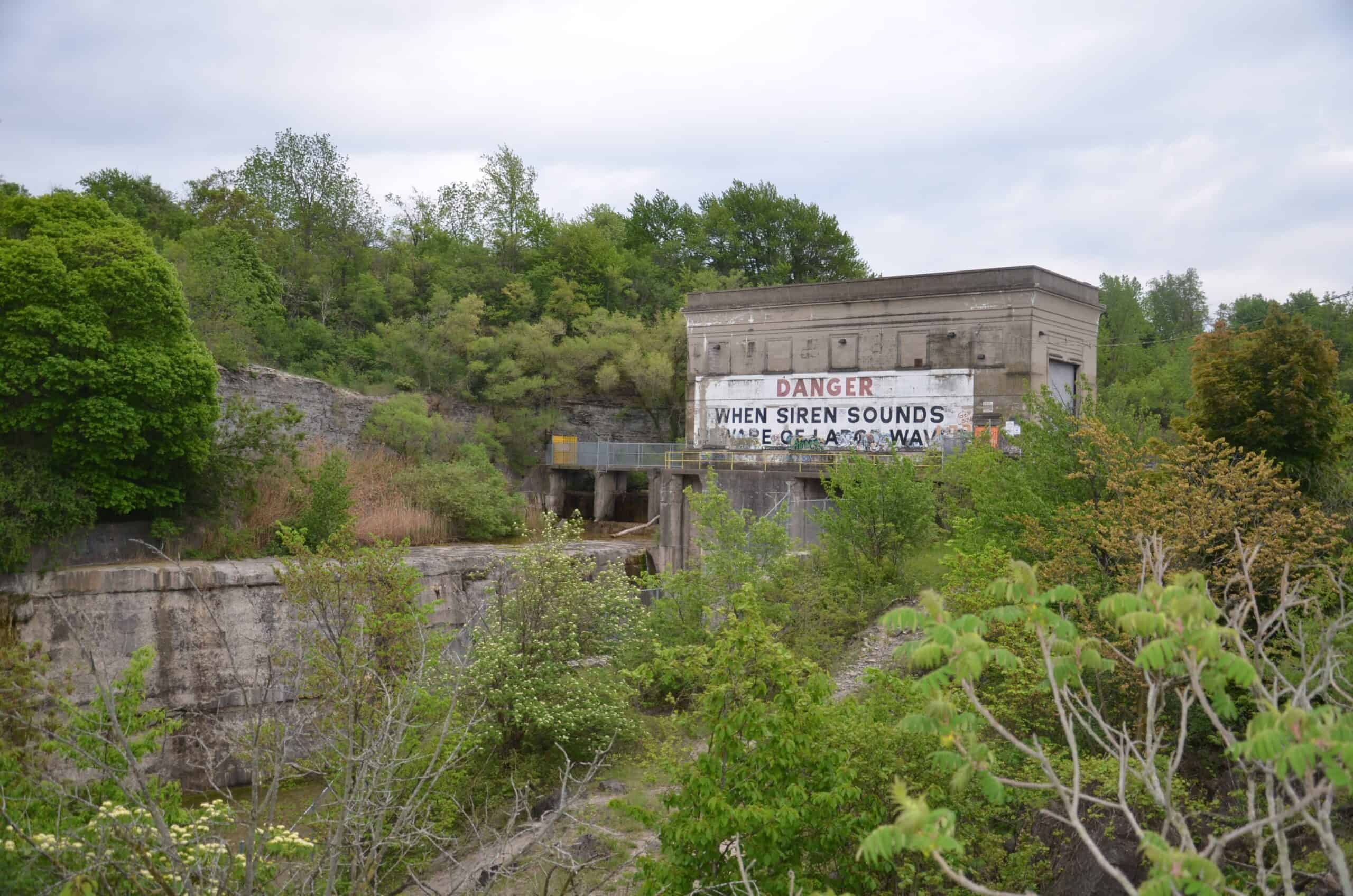
Adding to the uniqueness of the site is its proximity to the remains of the Third Welland Canal. Although the canal was abandoned as a navigable waterway following the completion of the Fourth Welland Canal in 1932, portions of its former alignment remain flooded and form part of the water management infrastructure associated with the modern canal.
Sadly, the tunnel and surrounding lands are managed by the St. Lawrence Seaway Management Corporation, and numerous No Trespassing signs around the perimeter serve as a reminder that the area is not open to the public. While the tunnel itself presents several hazards to curious explorers, restrictions also help protect the surrounding water management infrastructure, including the reservoirs, control structures, and waterways associated with the modern Welland Canal.
It is unfortunate that such an impressive piece of nineteenth-century engineering remains largely inaccessible to the public. The tunnel, its beautifully constructed limestone portals, and the surrounding canal infrastructure offer a unique glimpse into the history of transportation on the Niagara Peninsula. Together, these structures tell the story of a time when railways and canals were among the most ambitious engineering projects in Canada. Without continued attention and preservation efforts, there is a risk that this remarkable piece of Canadian engineering history will slowly disappear into the surrounding landscape.
Sources & Further Exploring
Brock University Library. (n.d.). Thorold: Welland Canal bridges and tunnels. https://exhibits.library.brocku.ca/s/welland-canal-bridges-and-tunnels/page/thorold
Canadian Military History. (2020). The Merritton Blue Ghost Tunnel: A relic of the Grand Trunk Railway. https://militarybruce.com/the-merritton-blue-ghost-tunnel-a-relic-of-the-grand-trunk-railway/
Niagara Region. (2024). Archaeological management plan. https://www.niagararegion.ca/culture-and-environment/pdf/archaeological-management-plan.pdf
Thorold Museum and Cultural Centre. (2025). The Merritt Tunnel (the Blue Ghost Tunnel). https://www.thoroldmuseum.ca/post/the-merritt-tunnel-the-blue-ghost-tunnel